
 Fuerteventura
Cueva del Llano prepares to reopen with headlamps, visitor limits and radon sensors
The project to resume visits to the cave in Villaverde, which has been closed since 2012, has received a favourable report from the Environmental Assessment Body of the Fuerteventura Island Council. Its president, Tomás Quesada, explains the conditions that must be met, the steps still to come and the possibility that the work could be completed before the current term ends. Among the cases being considered by the body is the Special Territorial Plan for Alternative Energy, whose assessment is nearing its second phase.
Pía Peñagarikano
Work to improve safety and help preserve endemic species such as the harvestman
Cueva del Llano is preparing to welcome visitors again after fourteen years closed to the public. The project drawn up by Gesplan has received a favourable report from the Environmental Assessment Body of the Fuerteventura Island Council, which has added new conditions to ensure visitors’ safety and preserve the habitat of the harvestman, a tiny arachnid measuring just two millimetres that is found only in this cave in Villaverde.
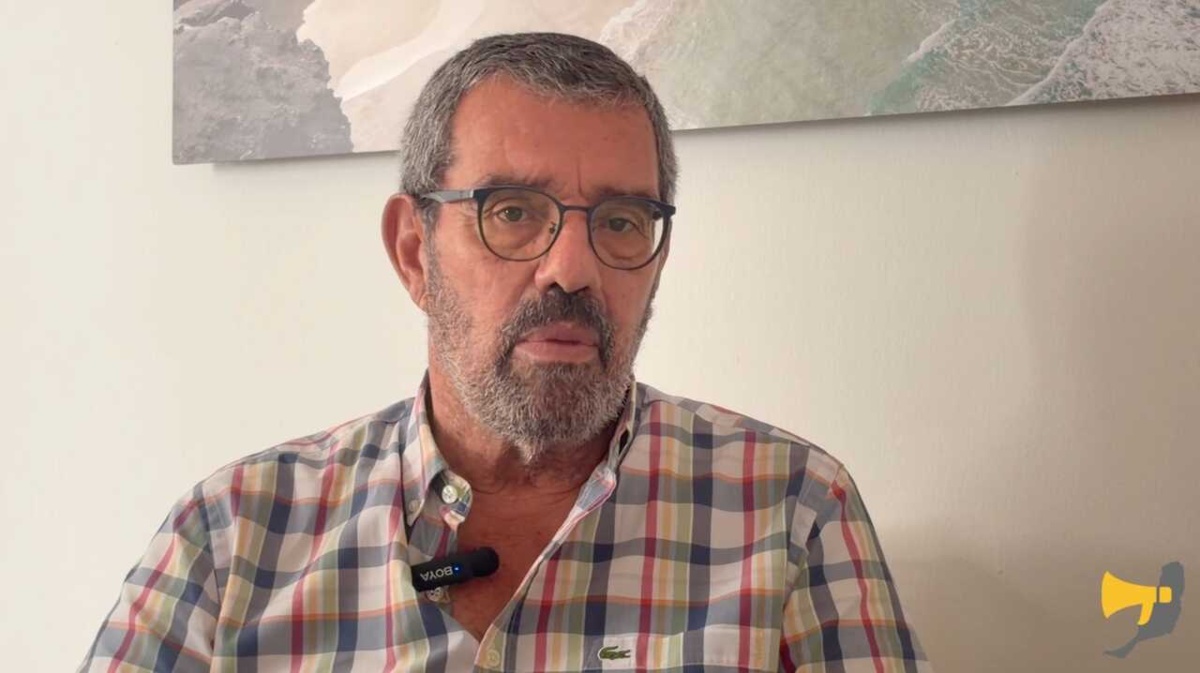
In an interview with La Voz de Fuerteventura, the body’s president, Tomás Quesada, said the cave was closed after small pieces of volcanic material began falling, with the incidents becoming increasingly frequent.
Since then, geotechnical, zoological and topographical studies have provided a better understanding of both the cave’s condition and the environmental factors that support the survival of the species living there.
The project includes securing small volcanic slabs at risk of falling, using drilled holes and epoxy resin, as well as improving the existing route and installing walkways to keep visitors out of certain areas.
Small channels will also be created to help rainwater reach the deepest part of the cave, where moisture plays a vital role in preserving the harvestman’s habitat. As a precaution, the environmental body has made it a condition that the route be shortened by one hundred metres from the length originally planned. But, essentially, “the cave itself will be left untouched; only the areas at risk of falling will be worked on to make them safe”, Quesada said.
Radon alarms and visits with headlamps
The presence of radon, a naturally occurring radioactive gas, means a monitoring system must be set up to measure its concentration, along with other factors such as CO₂, temperature and humidity.
The environmental body has gone further than the initial proposal, requiring alarms to be installed to warn when set thresholds are exceeded. Guides will be responsible for monitoring environmental readings during visits. If an alarm sounds because a safety threshold has been exceeded, they must lead visitors back outside the cave.
Most artificial lighting will also be removed to prevent the growth of plant life associated with exposure to light. Dim LED lighting will be allowed in certain areas along the route, and visitors will wear helmets with headlamps.
The number of people allowed in each group visiting the cave has yet to be determined. Quesada said the environmental body had deemed it necessary to carry out a prior study of the cave’s carrying capacity, as required under the Canary Islands Government’s second harvestman recovery plan.
Quesada also revealed that topographical surveys inside the cave had made it possible to map its boundaries on the surface and establish that part of the area extends into a plot in the Casilla de Costa development. He said the expanded protection zone had led La Oliva Town Council to halt the processing of a permit and to work with the landowner to ensure the affected area remains free of buildings.
What remains to be done, and when could Cueva de Villaverde reopen?
With the favourable environmental report issued, the file now goes to the Fuerteventura Island Council’s Department of Culture, which is responsible for incorporating the conditions, reviewing the tender documents and budget, and putting the work out to tender.
Quesada cautioned that the project’s specialised nature will require the involvement of companies with expertise in geotechnics, lighting and monitoring systems, which could lengthen the process. However, he believes the work itself should not take too long once a contract has been awarded.
The environmental body’s president said it was possible for the work to be completed before the current term ends, provided the procurement process goes ahead successfully.
The work will also be subject to technical supervision by the Canary Islands Government’s Department of the Environment, in accordance with the harvestman recovery plan.
Alternative Energy Plan nears second assessment phase
One of the most significant cases currently being handled by the Fuerteventura Island Council’s Environmental Assessment Body is the Special Territorial Plan for Alternative Energy in Fuerteventura.
Quesada said the first phase of the process had been completed, including consultations with public administrations and the preparation of a scoping document setting out the studies and requirements the plan must include.
He said the documentation prepared in response to those requirements was now undergoing review.
“The second phase will be with us before long,” he said, referring to the preparation of the corresponding environmental statement.
Work is also under way on the Fuerteventura Island Land-use Plan. Its documentation will have to go before the environmental body once the department responsible for the contract has checked that it meets the required standards.
Source: La Voz de Fuerteventura

