
 Canary Islands
1ºCAN-CC to seek an additional €1,337 million a year from the State to strengthen healthcare, education and social care in the Canary Islands
Teodoro Sosa and María Fernández are calling for fair funding for the islands and pledge to secure more healthcare resources, more specialists and recognition for public-sector workers. The nationalist candidates propose an annual €20 million State allocation to offset the additional costs of double insularity in healthcare, a measure that would particularly benefit Fuerteventura, Lanzarote and La Graciosa.
Redacción
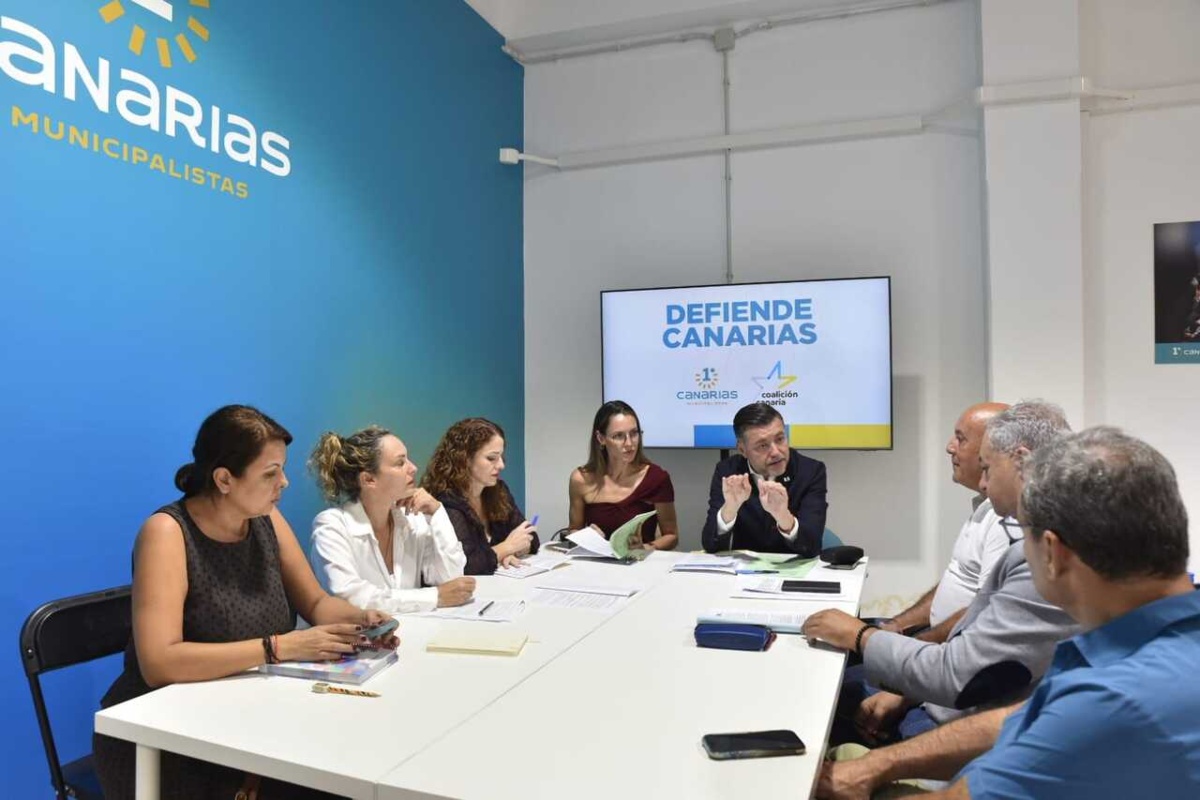
Primero Canarias-Coalición Canaria (1ºCAN-CC) will press in Madrid for a new regional funding system that guarantees the additional €1,337 million a year which, according to the nationalist alliance, is due to the Canary Islands and would help strengthen healthcare, education and social services.
At a meeting with representatives of Asamblea 7 Islas, the alliance’s candidates said the Canary Islands remained underfunded despite the significant population growth recorded in recent decades. Over the past 25 years, they said, the archipelago had gained around 500,000 residents and needed funding that reflected the reality of a region providing essential public services across eight islands.
“We are not asking for any privilege or preferential treatment. We are demanding that the Canary Islands receive the resources they are due on the basis of population and the particular features of our territory. These are funds for the Canary Islands and they must reach the Canary Islands,” said Teodoro Sosa, 1ºCAN-CC’s lead candidate for Congress in Las Palmas.
Funding that reflects the reality of the Canary Islands
Sosa and María Fernández said it was essential for the future funding system to take account of factors such as the region’s geographical fragmentation, the additional costs arising from insularity and the number of people served by the Canary Islands’ public services.
They therefore pledged to urge the government formed after the election to honour the agreement which, according to the party, has already been reached with the State, giving the Canary Islands an additional €1,337 million a year in funding at their disposal.
María Fernández, the alliance’s candidate for Congress in Las Palmas, said the extra funding would enable the Canary Islands to continue strengthening healthcare, building on the increase in the regional government’s budget during the current legislative term.
According to figures provided by the candidates, the healthcare budget has risen by €1,352 million, an increase of 37.8% that accounts for almost half of the total budget growth during the term.
Against this backdrop, Fernández asked what could be achieved for healthcare in the Canary Islands if the region received an additional €1,337 million every year under a fair funding system.
More specialists and resources to address double insularity
The nationalist candidates told representatives of Asamblea 7 Islas that one of the commitments in 1ºCAN-CC’s ‘Defender Canarias’ election programme was to ensure that national planning for specialist healthcare training places took the archipelago’s actual needs into account.
The aim is to increase the availability of professionals in specialties where recruitment is most difficult and ensure an appropriate response to the healthcare needs of the Canary Islands.
They also recalled that “mainland parties, from right to left, abstained or voted against a non-legislative motion put forward by Cristina Valido, which sought to reclassify these workers from C2 to C1 across the State”.
“Those workers who think a vote for the far right will bring pay rises or improvements to their reclassification should remember that vote. We are the ones standing by our healthcare workers,” Sosa added.
The nationalist alliance’s election programme also includes measures to bring healthcare closer to the public, particularly on the non-capital islands.
Its proposals include State support for moving specialists when it is more efficient to send the professional than the patient, as well as better coverage for inter-island travel for medical care.
Annual €20 million allocation for Fuerteventura, Lanzarote and La Graciosa
The nationalist alliance will also call in Madrid for a dedicated annual State allocation of €20 million to offset the additional costs of double insularity in healthcare, a measure it considers particularly important for improving care in Lanzarote, Fuerteventura and La Graciosa.
“What we are asking of the Government of Spain is not to be treated better than anyone else; we are asking to be counted properly. Our population is larger, we need more resources, and those €1,300 million offer many opportunities to improve healthcare and care provision. All we are asking for is fairness and for our Statute, our REF and our funding to be honoured,” Fernández added.
Commitment to healthcare professionals
Primero Canarias-Coalición Canaria also pledged to take Asamblea 7 Islas’ main demands to the State. The organisation represents workers whose roles are essential to the running of public healthcare.
Specifically, it will call for reform of the Framework Statute to update professional categories, improve pay and bring the classification of healthcare and non-healthcare staff into line with the current public system.
The proposal includes recognition for groups such as specialist healthcare technicians, nursing care assistants (TCAE), administrative assistants and hospital porters.
It also calls for a review of career progression so that these workers’ experience, training and responsibilities are properly recognised.
“Defending the Canary Islands also means defending the people who keep our hospitals and health centres running every day. That is why we will fight for the State to update regulations that have fallen behind and properly recognise the work of thousands of professionals,” Teodoro Sosa and María Fernández said.
More than 30 professional categories in public healthcare
Asamblea 7 Islas is an organisation representing workers in groups C, D and E of the Canary Islands Health Service (SCS). Its members include nursing care assistants (TCAE), hospital porters, administrative staff, pharmacy assistants, kitchen assistants, cleaners and other healthcare and non-healthcare professionals.
The organisation represents thousands of workers across more than 30 professional categories in the Canary Islands’ public healthcare system.
Source: La Voz de Fuerteventura

