
 Politics
Aceysele Chacón (Drago Canarias) backs a residency law and limits on population growth
The candidate for the Spanish Congress of Deputies, who is running alongside Héctor Morán on Drago Canarias’s list for Las Palmas province, champions a progressive, sovereignty-focused platform in contrast to the policies of other left-wing parties. Chacón lists passing a residency law among her priorities to curb population growth and address the housing problem. “It cannot be this easy to settle in paradise while we sell ourselves so cheaply,” she warns.
Pía Peñagarikano
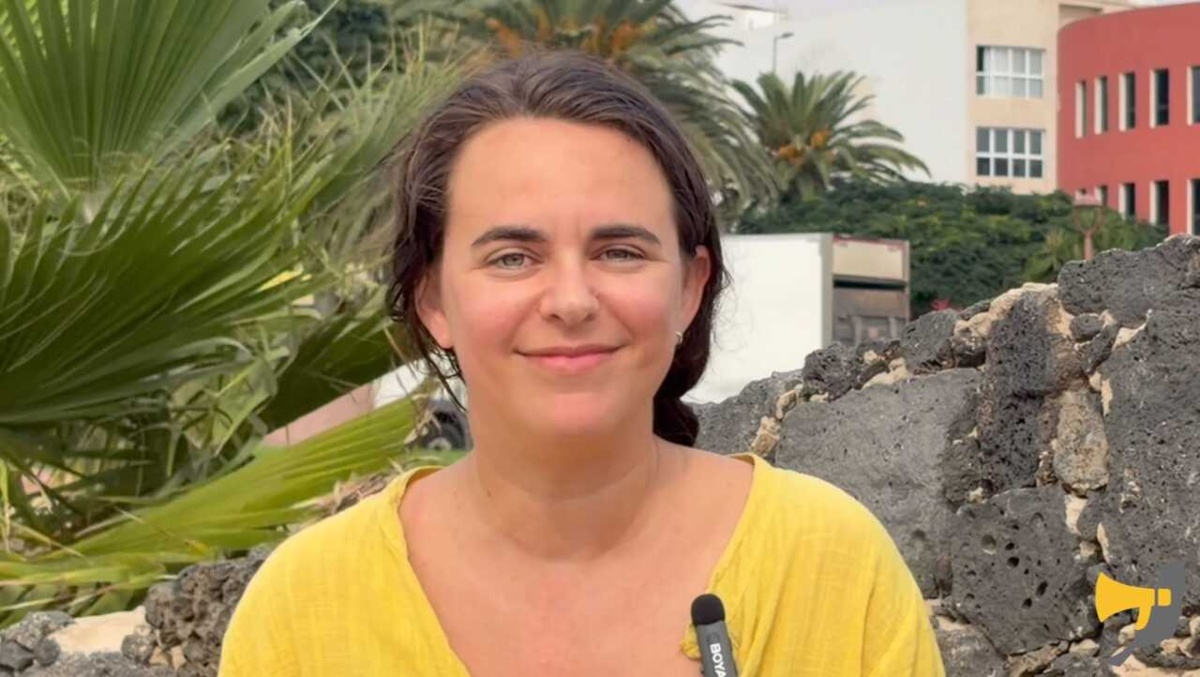
“What do we stand for? Fresh blood, clear ideas focused on the territory and its people, and freedom from any corruption case — things that are already weighing other parties down.” These are the words of Drago Canarias candidate Aceysele Chacón, from Fuerteventura, as she made the case for her party’s platform against the other political options contesting this Sunday’s general election, on 29N.
She is facing the election campaign just three months after giving birth, while the party is also preparing for the May 2027 elections.
Chacón said the early election had disrupted the party’s plans. It has decided to focus its efforts on the Congress of Deputies and not field a candidate for the Senate in Fuerteventura. She described this as a question of strategy and resources, saying the Senate was “not much use” as a means of territorial representation.
A residency law as a priority
Under the slogan “Hope defeats fear”, Drago Canarias is contesting the election with a programme of 70 specific proposals for the archipelago, organised around four main themes: living in the Canary Islands; connected and sustainable islands; sovereignty; and rights and democracy. Chacón highlighted the participatory nature of the programme’s development and the work party specialists had done to assess the viability of the proposed measures.
“Decisions about the Canary Islands must be made in the Canary Islands. That is the party’s foundation,” Chacón said. She cited the State’s powers over mining in connection with the debate about rare earths that could be prospected for in Fuerteventura if the State imposed this in the national interest.
She also named passing a residency law as a priority. “We have to get that done, one way or another,” she stressed.
Although she did not specify what the future legislation would entail, she called for a review of the agreements that allow EU citizens to settle on the islands, so they can be adapted to the archipelago’s economic and demographic reality. She said they no longer reflected that reality. “You cannot allow someone to buy home after home after home just because they have more money,” she said, extending this argument to legal entities. “Agreements can be changed. That agreement may no longer fit the islands’ economic and demographic circumstances today, and it needs updating,” she argued.
“It cannot be this easy to settle in paradise while we sell ourselves so cheaply,” she insisted.
The candidate distinguished this issue from the arrival of migrants who intend to continue their journey to Europe. They should be treated with dignity and not have obstacles put in their way, she said.
She nevertheless argued for different policies to reflect the realities of each island. “We cannot apply the same policy in Fuerteventura as in La Palma,” she said.
The island, “a cake being eaten in chunks”
Among her proposals specifically for Fuerteventura, Chacón raised the possibility of building social housing on Ministry of Defence land in Puerto del Rosario, subject to the land being transferred. She also called for the protection of traditional fishing settlements, referring to Cueva de la Negra and the fishermen’s buildings on the Jandía peninsula. “In the end, the island looks like a cake being eaten in chunks,” she lamented.
The candidate also called for more medical specialists, improved healthcare staffing ratios and greater provision of infrastructure.
Chacón questioned the economy’s dependence on tourism and the limited job opportunities available to qualified young Canarians who want to return to the islands.
She called for economic diversification, the modernisation of the primary sector through innovation, and policies tailored to the needs of each island.
Criticism of the left-wing alliance
Chacón explained why Drago Canarias had decided to run alone, ruling out joining Unidad por el Pueblo Canario (UPC). Among its disagreements with Nueva Canarias, she cited the growth in tourist beds on Gran Canaria and the Chira-Soria project. “You cannot call yourself left-wing when what you are actually doing is destroying the territory,” she said.
She also questioned disagreements among the parties in the alliance during the election campaign, as well as the presence of representatives from national parties at its events. “We want to do things honestly and properly,” she said, rejecting alliances that, in her view, are driven by the desire to win a seat.
“We focus, of course, on social rights. We want healthcare to be public and education to be high-quality, but we do not believe that the parties that have called themselves left-wing up to now have pursued left-wing policies.”
Asked whether the split vote might benefit the right and the far right, Chacón blamed the PSOE and other left-wing parties for the situation. “You cannot blame us for wanting to give a Canarian, progressive voice a platform,” she said.
The candidate concluded by asking voters to support Héctor Morán and reaffirming Drago Canarias’s intention to transform the archipelago’s economic model. “Please, I ask you to trust us. We are people with a great deal of determination and full of hope that we can change this and build a better future,” she said.
Source: La Voz de Fuerteventura

