
 Fuerteventura
CCOO, UGT and the Green Tide mobilise in Fuerteventura on 11 November: “We cannot accept that having a job does not guarantee a decent life”
The grassroots unions CCOO, UGT and STEC-Intersindical Canaria took part in a demonstration on Wednesday 11 November, during the general strike, calling, among other things, for wages that would restore purchasing power, urgent measures to improve access to housing and more resources for public services. Union representatives were particularly pleased with the turnout at the march, held on a day when the strike had little impact on Fuerteventura’s productive sector.
Pía Peñagarikano
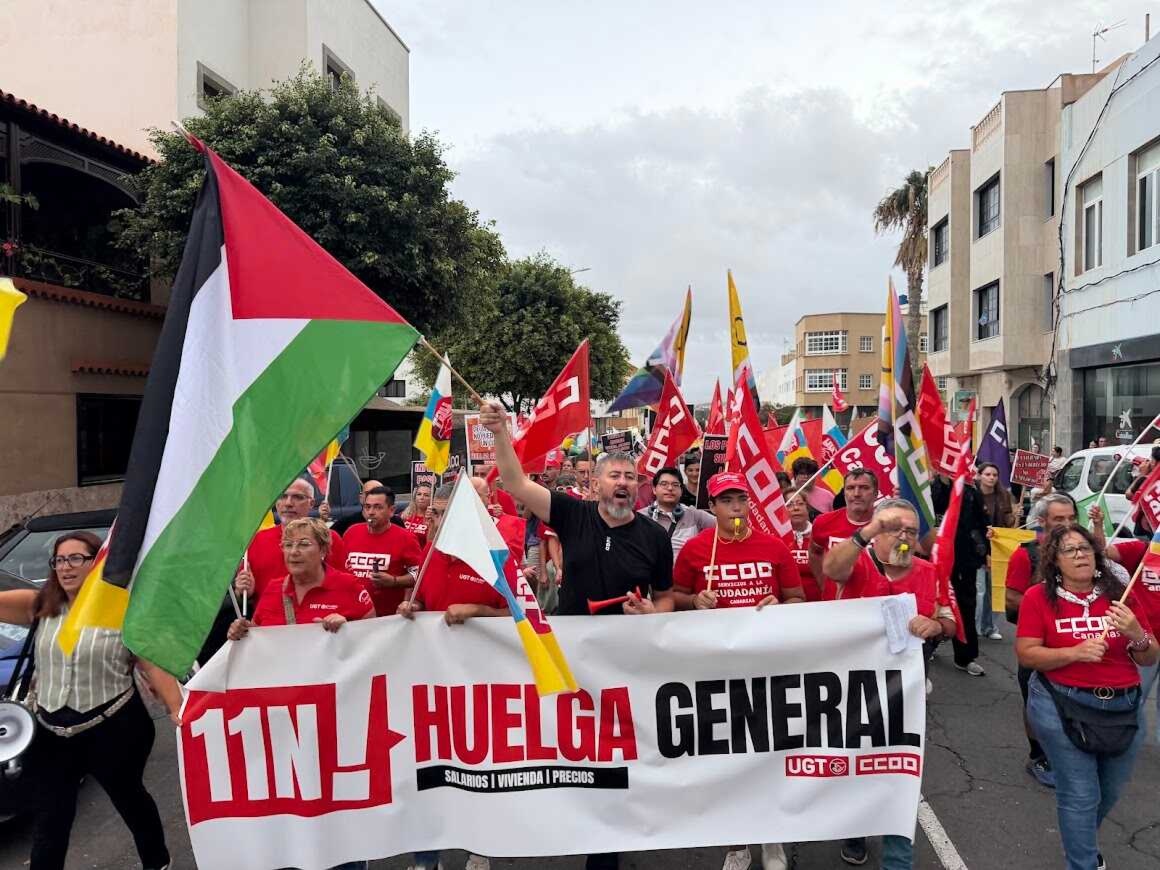
CCOO, UGT and STEC-Intersindical Canaria took to the streets of Puerto del Rosario on Wednesday afternoon during the general strike called for 11 November. Housing shortages and the difficulty of finding somewhere to live were not the only issues raised by demonstrators. Chants such as “Not for investment—housing to live in” and “More investment in education” mingled with banners calling for decent wages and a better quality of life.
Whistles sounded throughout the march. At one point, demonstrators could even be heard insulting Santiago Abascal, leader of Vox, and hurling abuse at Isabel Díaz Ayuso, president of the Community of Madrid, although these chants were quickly quelled.
The march set off at around 5.30pm from the Island Directorate of the State Administration in Puerto del Rosario. The crowd—around 700 people according to the Local and National Police, and around 1,200 according to the organisers—proceeded along León y Castillo Street to Avenida de la Constitución, then returned via Secundino Alonso to the starting point, where a joint manifesto was read out.
The unions behind the manifesto said rent was taking up most workers’ wages and that the difficulty of finding a home had forced others to leave Fuerteventura.
The organisations also stressed that the wealth generated by the island, which welcomes millions of visitors, was not translating into well-being for the people who sustain its economic activity.
They criticised inadequate wages, precarious employment, excessive workloads and understaffing. In response to the rising cost of living, they called for wages that would restore purchasing power, as well as stable employment, respect for collective agreements, observance of rest breaks, genuine equality and effective protection of workers’ health.
Assaults, threats and housing shortages affect education
The unions called for urgent measures to improve access to housing for working people and teachers posted away from home. “This reality also affects teachers, who end up turning down posts because they cannot afford to live where they are needed,” they said in the manifesto. The three organisations warned that the difficulty of filling these posts had consequences for pupils.
They also called for more resources for public education, adequate staffing and class sizes, and less bureaucracy.
The manifesto highlighted assaults, threats and situations in which some teachers were left without adequate protection, and called for measures to keep them safe.
More resources for healthcare and social services
The demands also covered healthcare and social services. The unions called for these services, along with education, to have the resources needed to serve the public.
They also advocated an economic model that shares wealth and places “people’s well-being above corporate profit”.
CCOO, UGT and STEC-Intersindical Canaria thanked everyone who supported the strike and expressed solidarity with those who were unable to join it because of fear, precarious circumstances or personal responsibilities.
Union representatives gave the day’s strike a positive assessment, particularly in light of the public response to this afternoon’s demonstration.
Source: La Voz de Fuerteventura

