
 Fuerteventura
Entre Mares condemns EU migration policy that “creates more victims and strengthens mafias”
The association criticises the European Union’s strategy of outsourcing border control to North Africa, warning that it is making migration routes increasingly dangerous. Once again, the group has commemorated and drawn attention to the latest deaths in the Canary Islands and Senegal in Church Square, Puerto del Rosario, while calling for safe migration routes.
Pía Peñagarikano
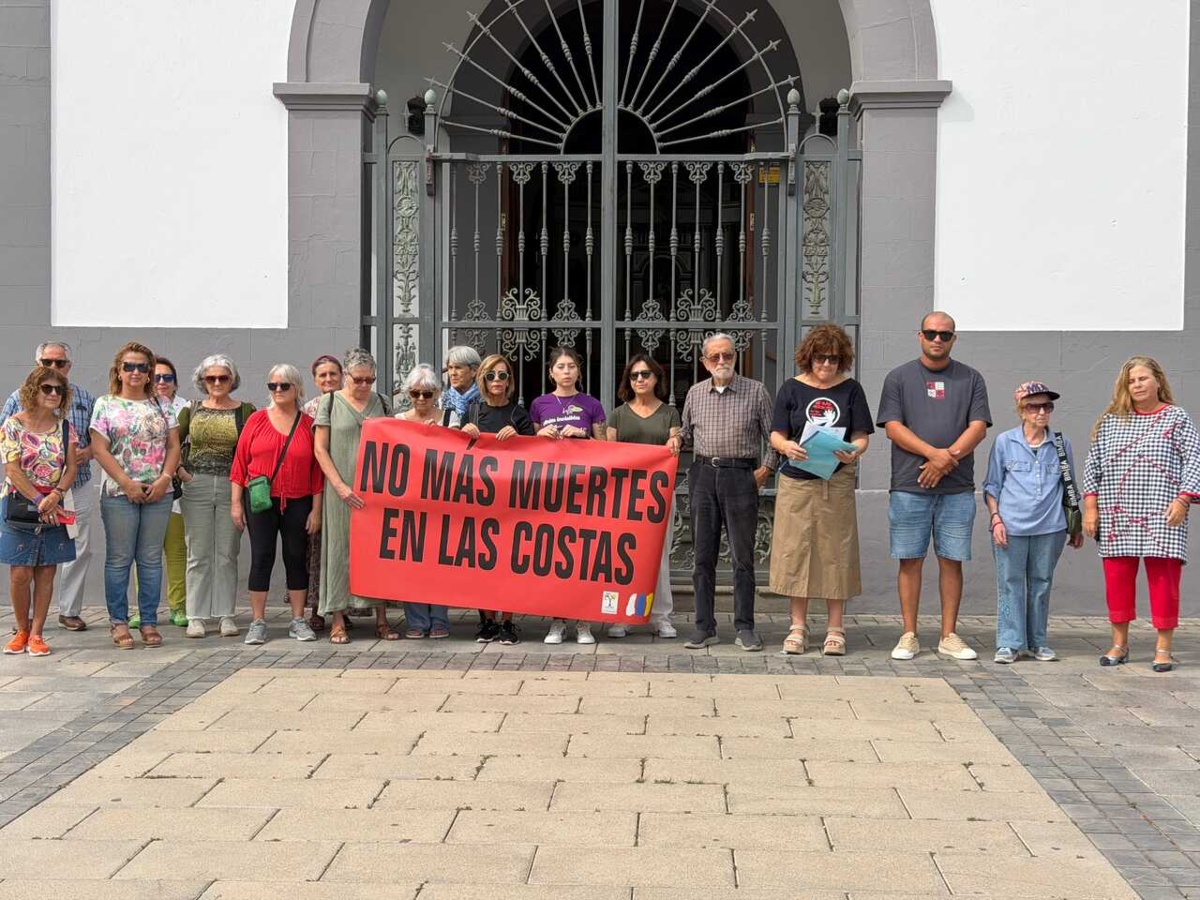
The Entre Mares sociocultural association again denounced on Monday that European Union migration policy is helping to increase the risks of journeys to the Canary Islands and benefiting organisations that profit from people trafficking. “European migration policy creates more victims and strengthens mafias,” the group warned in a statement read by María Greco. It questioned the strategy of outsourcing border control to North Africa and called for a profound change in how migration is managed.
The statement follows the latest tragedies on the Atlantic route. The association expressed its sorrow over the death of the person who recently arrived dead aboard a boat at the pier in La Restinga, on El Hierro, and over the recovery of more than twenty bodies on Saturday at Lompul beach in Senegal.
In Entre Mares’ view, these deaths once again highlight the consequences of policies focused on preventing arrivals in European territory without offering safe alternatives to people leaving their countries.
“The increase in boats arriving in the Canary Islands is a consequence of Europe’s strategy of outsourcing border control to North Africa. It does not stop migration; it only strengthens mafias and makes routes more dangerous,” the organisation said.
Entre Mares believes tighter border controls force migrants to take ever greater risks and ultimately benefit the networks organising clandestine journeys.
It argues, therefore, that tackling these organisations must involve providing legal and safe alternatives. In its statement, the association said that reducing the dangers linked to migration and the displacement of refugees “requires normalising the flows, normalising more fluid mobility”.
“We will not remain silent”
The organisation also denounced what it described as a lack of institutional compassion in the face of deaths along African and Canary Islands coasts.
“We will not remain silent in the face of the inhumanity of these deaths, or the extreme human rights abuses involved in journeys where nobody cares whether you live or die,” it said.
The recurring tragedies in the Atlantic, it said, expose “the dehumanisation of politics” and an institutional response that it considers inadequate to human suffering.
Entre Mares also warned of the social consequences of framing migration policies without taking vulnerability, marginalisation and discrimination into account. It said millions of migrants end up as cheap, disposable labour or as scapegoats for the failures of economic and social policies.
“Dignity has no nationality”
The association also urged the public to reflect on what leads someone to risk their life at sea or crossing the desert in search of a dignified future.
It noted that nobody expects to be forced to leave their country in an unseaworthy boat or face an extremely dangerous journey to protect their own life and that of their family.
“Dignity has no nationality,” the group stressed, insisting that the rights of migrants are part of the fundamental rights of everyone.
“When migrants’ rights are denied, the rights of all citizens are at risk,” it warned.
Entre Mares also called for people who die or go missing during these journeys to be identified and for their families to be told what happened. The organisation considers it essential to preserve the memory of the victims and ensure their dignity is respected.
Source: La Voz de Fuerteventura

