
Rafa Marrero: “There are 6,500 wealthy people in the Canary Islands who decide how politicians should act”
4% of the population holds 59% of the Canary Islands’ wealth. He urges the public to act as a pressure group and “set the course” for their political representatives.
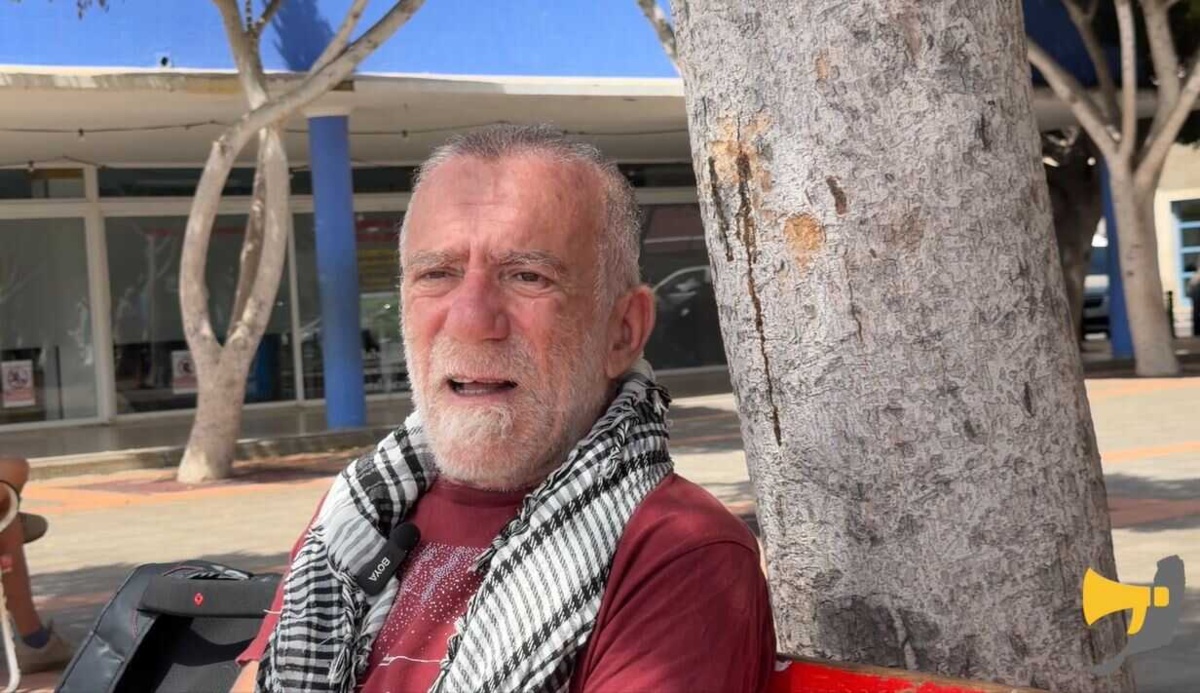
The activist and retired teacher, who worked in education for almost four decades, says the concentration of wealth and the influence of economic elites over politics are among the reasons behind the call for public mobilisation on 26 September. In Fuerteventura, it will take place at 12:00 in front of the Directorate of the Island Administration of the General State Administration in Puerto del Rosario.
“There are 6,557 wealthy people in the archipelago, according to the Canary Islands Consultative Council,” he said in an interview recorded in Tran Tran Square, Gran Tarajal. In his view, they are “the ones who call the shots between the islands and ultimately decide what politicians should do and how they should act”.
That 0.4% of the population, he stressed, controls 59% of the Canary Islands’ wealth, while the rest of the population shares the remaining 41%. He described this level of inequality as “shameful” and incompatible with a fully functioning democracy.
Marrero argues that some politicians are more responsive to the interests of those who provide financial backing than to the public’s demands. “They are more concerned with who gives them support, and who gives them financial support, and with the capital behind the political group that comes to power after winning an election,” he said.
He also cited the role of the media, which can promote certain figures and messages over others. In his view, the result is a political class detached from the needs of the majority.
The public must set the course and act as a pressure group
In response, Marrero is urging people to organise and maintain pressure on the streets. “The public must set the course for our political representatives,” he stressed. Acting as a pressure group, he explained, means occupying public spaces and demanding action on issues that directly affect people’s living conditions.
“Many of our neighbours are people who work, break their backs working and still can’t make ends meet,” he said.
Marrero denounced the spread of poverty among people in work, contrasting their situation with the profits recorded by major companies in the tourism sector.
The mobilisation’s demands include housing, wages, healthcare, public education, social benefits and care for older people. It also calls for the protection of the territory and limits on tourism growth.
Marrero said the call builds on the focus of demonstrations held in recent years under the slogan Canarias Tiene un Límite (The Canary Islands Have a Limit).
While those protests focused mainly on environmental degradation, the Por una Democracia Real initiative also aims to address working conditions, economic inequality and the situation of women, he stressed.
During the interview, Fuerteventura’s coordinator for the mobilisation questioned the idea that democratic participation should be limited to voting every four years. “Politicians call on us to take part in elections, but once we’ve cast our votes, they forget about the people who placed their trust in them,” he said.
Marrero believes elected representatives should listen to the public and fulfil the commitments in their manifestos. “If you don’t respond to the demands set out in your election manifesto, step aside; there will be other people who may be able to do it better,” he said.
He also recalled the mass demonstrations held in the Canary Islands to demand limits on the tourism model and protect the territory. However, the Government “has done absolutely nothing to address those demands”, he said. New tourist beds and projects affecting natural areas continue to be approved despite opposition expressed on the streets, he added.
“If it were up to the Partido Popular and Vox, we would have a dictatorship right now”
In the interview, Marrero voiced concern about the growth of the far right, linking it to the lack of political responses to worsening living conditions. “The far right thrives on a very simplistic message, based on the idea that someone who is in the same position as you, or worse off, is your enemy,” he said.
He also accused organisations considered progressive or left-wing of failing to implement policies in line with their stated principles. This “dereliction of duty”, he argued, makes it easier for far-right messages to gain ground.
Marrero also rejected proposals to cut taxes for people with the highest incomes and wealth. “If taxes are cut, how will public services be funded? How will we pay for the doctor who treats me, the nurse, the teacher or social benefits?” he asked.
He went on to say that “if it were up to the Partido Popular and Vox, we would have a de facto dictatorship right now”.
Marrero accused both parties of trying to stage what he described as “a soft, legal coup to destroy the Government that is here”.
After 26 September
Marrero stressed that the mobilisation is not being organised by any political party. “The only affiliations are citizens,” he said. It began more than a year ago, he explained, with meetings between people linked to social organisations and others who did not belong to any group.
According to Marrero, the initiative is backed by 16 trade union organisations, 14 women’s and LGBTQ+ groups, tenants’ associations and various environmental organisations.
The organisers plan to meet again after the protest to draw up a roadmap and agree on further action.
Marrero ruled out the movement becoming a political party, arguing that its role should be to apply pressure from the streets.
“Social movements must put pressure on political groups to implement, within the institutions, the policies people are demanding,” he said.
The 26 September gathering is expected to mark the start of a mobilisation that its organisers want to sustain over time.
“One gathering or one demonstration alone won’t solve this,” Marrero said, urging the public to keep demanding that their political representatives “do what they are supposed to do: represent us”.
Source: La Voz de Fuerteventura