
 Politics
Rubén Reyes (UPC) calls for a more active Fuerteventura presence in Madrid: “We need to put forward proposals and work”
The Unidad del Pueblo Canario candidate for the Senate is calling for greater political engagement to defend the Island’s interests. Reyes, who is moving from social activism into politics with Asambleas Municipales de Fuerteventura (AMF), welcomes the unity of progressive forces and hopes to bring Fuerteventura’s voice to Madrid, with housing, water and the redistribution of tourism wealth among his top priorities.
Pía Peñagarikano
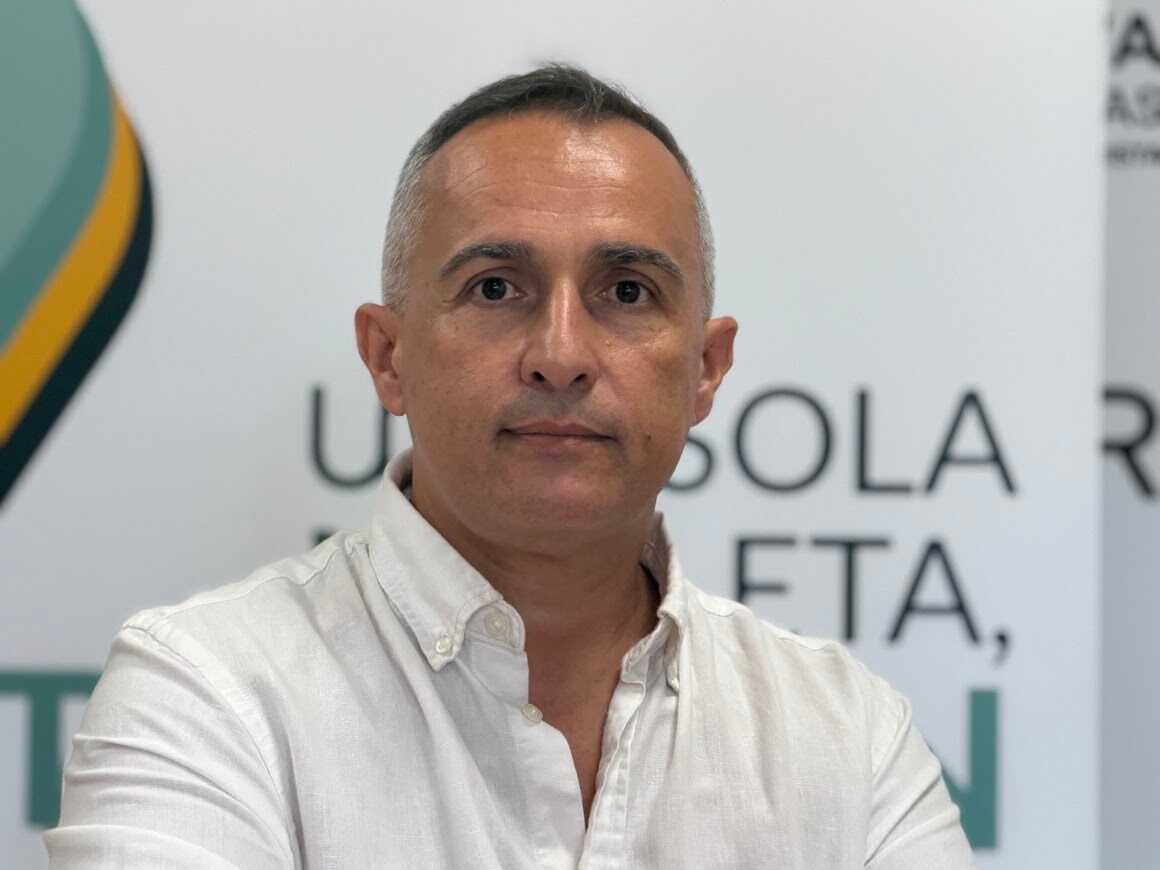
Rubén Reyes, a teacher, career civil servant since 2019 and president of the Futuro Isleño association, is standing for the Senate for Fuerteventura for the first time under the banner of Unidad del Pueblo Canario (UPC).
With qualifications in teaching and educational psychology, and a background in social activism, he entered politics through Asambleas Municipales de Fuerteventura (AMF), where he found a platform aligned with his left-wing convictions and commitment to public service.
“I think the time has come to move from the social movement into political activity,” he said in an interview with La Voz de Fuerteventura, convinced that the Island’s many needs call for greater involvement from its institutions.
Reyes says he is approaching this new stage prepared and eager to work for Fuerteventura. “I’m going to do everything I can to convey that confidence, that preparation and that desire to work and fight for Fuerteventura,” he said.
A more active presence in Madrid
The candidate believes Fuerteventura’s representation in the Senate has had too little impact and is calling for greater political engagement to defend the interests of the island’s residents.
Asked about the work of the current senator, he avoided personal judgements but was critical of the results of her activity. “From what I’ve heard, there’s been little or nothing,” he said.
Reyes attributed Fuerteventura’s limited profile in Madrid to a lack of work and political will. “It’s not a question of going there, taking that seat and raising your hand when required,” he said, arguing that parliamentary work should result in proposals and involve ongoing contact with people’s needs.
Housing, water and redistribution of tourism wealth
Reyes named housing as the most urgent of Fuerteventura’s main problems.
“We cannot accept that there are no decent homes for people who genuinely want to live in Fuerteventura and build their lives there,” he said.
He also called for solutions to water-supply problems and questioned whether the wealth generated by tourism benefits the resident population sufficiently.
In this context, he backed introducing a tourist tax, with exemptions for Canary Islands residents, to offset the impact of tourism on the territory and improve public services. He welcomed the initiative put forward by La Oliva Town Council, but said regulation should be handled at regional level to overcome the limitations of an exclusively municipal scheme.
Reyes also highlighted the difficulties faced by patients from Fuerteventura who have to travel to Gran Canaria for specialist healthcare. He criticised the financial compensation for these journeys, which he considers insufficient to cover the costs of double insularity.
He also cited low wages, the rising cost of groceries and the urban decline of Puerto del Rosario, where he lamented the dirt, abandoned vehicles and poor condition of the roads.
The left-wing alliance and opposition to agreements with Vox
The candidate welcomed the coming together of Nueva Canarias, Podemos, Sumar and Izquierda Unida in Unidad del Pueblo Canario, an alliance he considers necessary to strengthen representation for progressive and nationalist forces.
He regretted that Drago Canarias had not joined the agreement, but declined to speculate on the reasons for its decision.
On ideological matters, he challenged the policies of right-wing parties and was particularly critical of Coalición Canaria’s position on its agreements with Vox.
“They set these red lines, or want to set them in front of the public, and then they don’t stick to them,” he said.
Disagreements within AMF: “a media circus”
At island level, Reyes regretted Fuerteventura Avanza’s decision to leave its alliance with Asambleas Municipales de Fuerteventura, while saying he respected the group’s reasons.
“Of course, personally, I would have liked us to stay together,” he acknowledged.
He also commented on the disagreements surrounding Juan Nicolás Cabrera’s candidacy for the presidency of Fuerteventura Island Council, endorsed by the Alliance for Fuerteventura, which comprises Asambleas Municipales, Nueva Canarias and Juntos por Pájara. The controversy arose after Mayra Marichal questioned Cabrera’s selection, prompting a public dispute over the choice of candidate.
Reyes was particularly critical of the way the differences had been aired in public.
“I didn’t like the way all this was handled, in the sense that some people have turned it into a media circus,” he said, arguing that internal disagreements should be resolved within political organisations.
Finally, he confirmed that his candidacy for Puerto del Rosario Town Council with AMF, announced for the municipal elections on 23 May, would depend on the outcome of the general election on 29 November.
If he wins a seat in the Senate, someone else would have to take up the municipal candidacy.
“Right now, all my efforts and those of the team alongside me are focused on working for the Senate candidacy.”
Three women and Reyes
To conclude, Reyes also acknowledged the political careers of his three opponents in the election: incumbent Socialist senator Paloma Hernández, People’s Party candidate Esther Hernández and Coalición Canaria representative Nuria Cabrera.
Aware that he is the only candidate without previous experience in elected political office, he expressed his respect for all three women and welcomed their participation in the election.
However, he argued that Fuerteventura’s representative should act independently of party directives when they conflict with personal convictions. “I’m not going to vote for something, or go along with or support something, that I don’t genuinely believe in,” he concluded.
Source: La Voz de Fuerteventura

