
Fuerteventura’s drowning toll doubles in 2026: 12 deaths, 57 across the Canary Islands
500 Km de Costa warns that 12 people have drowned in Fuerteventura and 57 across the Canary Islands in 2026. It calls for more prevention, closer supervision of children at swimming pools and better lifeguard contracts.
Fuerteventura has recorded 12 drowning deaths so far in 2026, twice the six recorded over the whole of last year.
The island has the second-highest number of deaths from drowning in the archipelago, behind Tenerife alone, according to figures from the association Canarias, 1.500 Km de Costa. The association puts the total number of people who have drowned this year at 57.
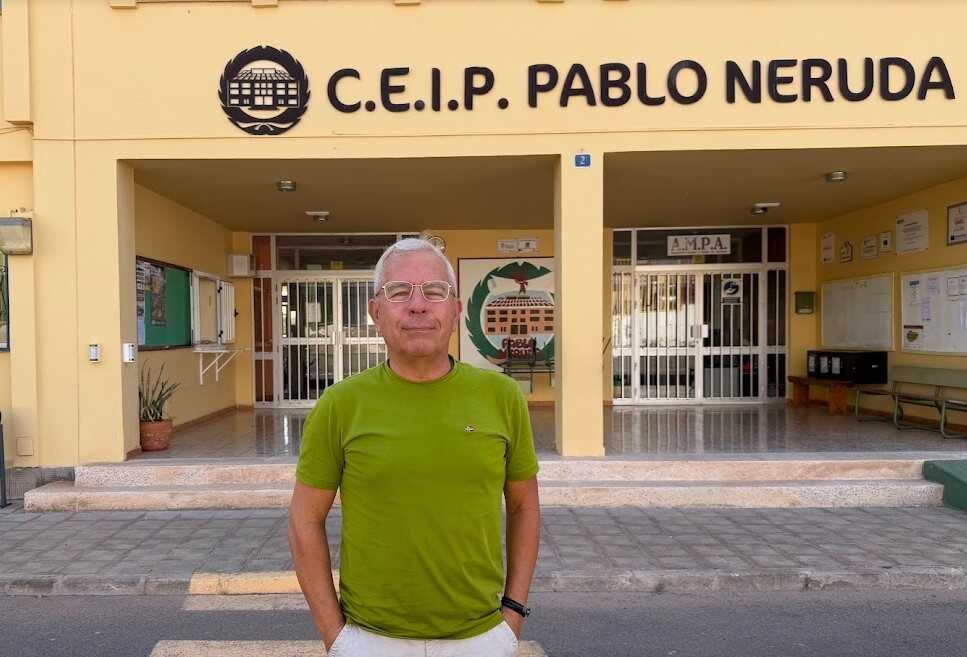
Its president, Sebastián Quintana, voiced concern over the trend during a water-safety session for pupils at CEIP Pablo Neruda in Puerto del Rosario.
He stressed the need to strengthen water-safety education from an early age and to allocate more public resources to large-scale awareness campaigns.
Quintana notes that in 2025 the Canary Islands recorded 69 drowning deaths, compared with 53 people killed in road traffic accidents across the archipelago.
In his view, this disparity highlights the need to give greater attention to risks in the water and invest in awareness campaigns aimed at both residents and tourists.
Eight minors have died: “Parents have let their guard down”
One of Quintana’s biggest concerns is the rise in drownings among children. Eight minors have died in the Canary Islands in 2026.
Four underage victims were recorded over the whole of 2025, a figure that has already doubled before the year has ended.
The president of Canarias, 1.500 Km de Costa warns in particular about the dangers at swimming pools, where he believes many parents “have let their guard down”. He says that in the overwhelming majority of deaths, the adults responsible were absent or not paying sufficient attention; many were “busy” with their mobile devices.
Quintana insists that children must be supervised at all times. A drowning can happen in just a few seconds, without the victim having time to call for help or shout before going under.
He is therefore calling for greater awareness among families and points out that knowing how to swim does not remove the danger. Adult supervision is essential at private pools, public facilities and tourist accommodation alike.
Talks and personal accounts that make an impact
Sebastián Quintana said that during sessions at schools, pupils learn not only about sea currents, wave conditions and safety guidance, but also share personal experiences that show the consequences of these accidents.
The campaigner recalled a recent session in which one pupil told the class that a friend, just 12 years old, had died on 21 July at La Laja beach in Las Palmas de Gran Canaria.
The two children had been playing at the water’s edge when the sea swept them away. Emergency teams rescued the boy alive but were unable to save Fabiola.
It is a story the pupils in the classroom will no doubt remember, and one that can help them avoid danger. Such stories come from the Canary Islands and from other countries where Sebastián Quintana promotes prevention.
Influencers and dangerous beaches
Another issue raised by the association’s president is the influence of social media and certain content creators who promote beaches, natural pools and coastal spots as paradise destinations without explaining the risks. He cited Cofete as an example: an “extremely dangerous” beach where there is also no lifeguard cover.
Promoting these places can attract many visitors who are unfamiliar with the characteristics of the Canary Islands coastline, sea currents, sudden changes in wave conditions or the difficulty of reaching certain areas.
Quintana warns that many foreign tourists arrive in the Canary Islands without enough knowledge of how the sea behaves and put themselves in danger by trying to swim at places they have discovered through videos and posts.
But visitors are not the only ones at risk. The association’s president also warns that local residents can become overconfident and sometimes ignore safety warnings because they are used to the surroundings.
Calls on INE to publish official drowning statistics
Sebastián Quintana is also calling on the Spanish Government to task the National Statistics Institute (INE), through the relevant ministry, with collecting and publishing official figures on drowning deaths across the country.
He says the Canary Islands is the only autonomous community where the association he leads systematically tracks these accidents, using information provided by official sources, including emergency services and law enforcement agencies.
He is therefore calling for a nationwide statistical system that would establish common criteria and provide consistent official figures for all the autonomous communities. He also urges authorities to distinguish deaths by choking from deaths by drowning.
He believes accurate information is essential to understanding the scale of the problem, analysing the circumstances of accidents and guiding public prevention policies.
No to low bids in public tenders
The association’s president also referred to the first regional agreement for lifeguards and rescue staff working in natural areas in the Canary Islands, signed recently, which represents progress in these professionals’ working conditions.
The agreement provides for an initial 30% increase in basic pay, gradual improvements to remuneration, a shorter annual working schedule, recognition of professional grades and compensation for working on public holidays and on certain islands where it is difficult to recruit staff.
Against this backdrop, Quintana is urging town councils and other public bodies responsible for contracting lifeguard and rescue services to take the new working conditions into account and avoid awarding contracts primarily on the basis of the lowest bids.
He warns that contracts must be adequately funded, with qualified staff and the right equipment to respond to any emergency.
He stresses that lifeguards are professionals whose job is to protect and save lives, a responsibility that must be reflected when public bodies set budgets and the terms of public tenders.
Prevention, he insists, requires both awareness campaigns for the public and rescue services capable of responding effectively to water-related accidents.
That work also begins in classrooms such as those at CEIP Pablo Neruda in Puerto del Rosario.
Source: La Voz de Fuerteventura