
Jana González: “We are concerned about the care people in our land receive, especially the most vulnerable”
Jana González: “We are concerned about the care people in our land receive, especially the most vulnerable”.
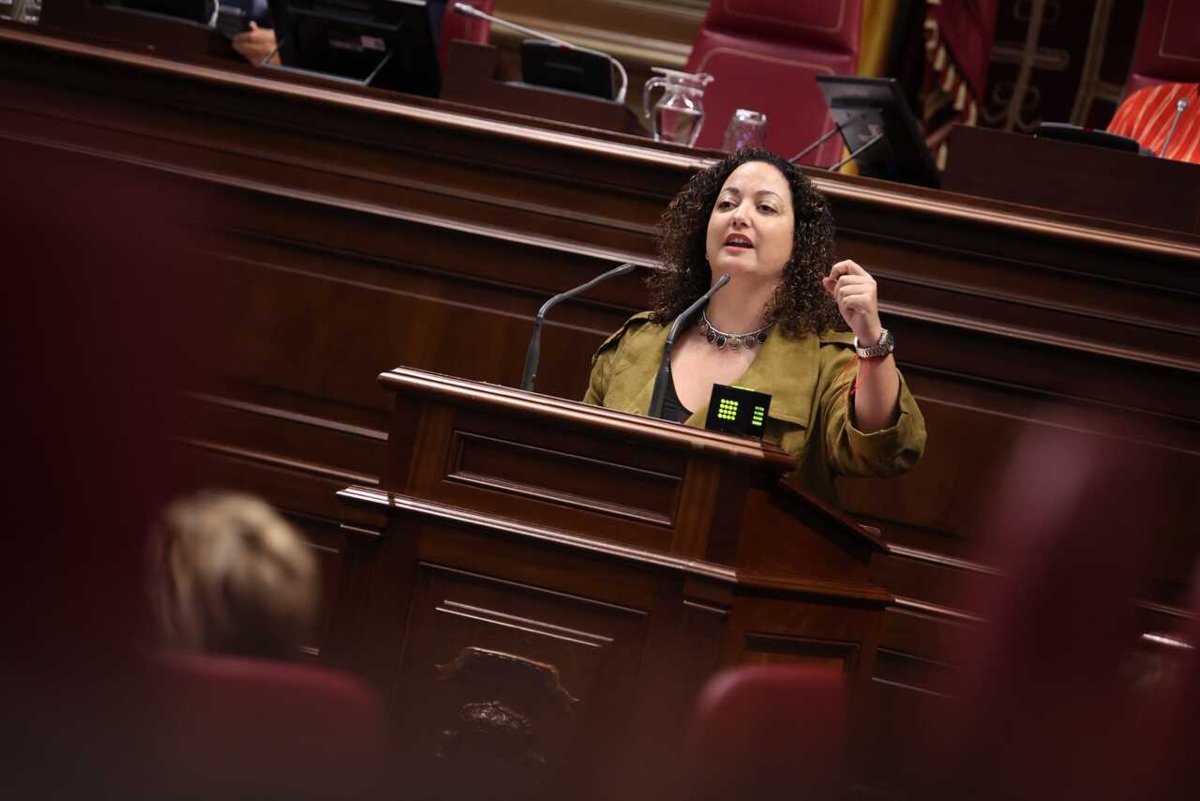
Jana González Alonso, a member of the Canarian Nationalist Group (CCa), spoke in this week’s plenary session of the Parliament of the Canary Islands about the management of social services in the Canary Islands. She pointed to improvements in the sector during the current parliamentary term, citing reports published by the State Association of Directors and Managers of Social Services.
The report states, she explained, that the Canary Islands are one of five autonomous communities to have improved their overall management in 2025 compared with the previous year. The archipelago currently ranks fourth overall, with a score of 6.35, just one point below the highest score, achieved by the Basque Country.
However, Jana González called for further work to raise that score. “It is important to analyse the progress made during this parliamentary term and the improvements in care for people. There is still more to do in the Canary Islands, but the changes under way are delivering results,” she added.
Funding for social services in the Canary Islands
The study also describes the Canary Islands’ position as “excellent economically”. The deputy said this was a reason to congratulate both the Canary Islands Government and the other institutions involved, including local councils and Island Councils. She highlighted the report’s recognition of the Island Councils’ work and the funding they provide to support “the improvement of social services on the islands”.
The report also highlights the difficulties the islands face in providing services because of the particular characteristics of their territory. In this context, Jana González referred to the agreement signed by the Canary Islands Government and the island councils to provide dependency and disability services. Thanks to the agreement, she said, “the range of places available has been expanded and prices across the archipelago have been updated to reflect the actual costs on each island”. “This is an effort that had not been made before,” she added.
“We understand that this is a financial effort the Canary Islands Government had to make, but the Government of Spain should also be involved. It contributes only 17% towards care for people with dependency and disabilities,” the deputy said.
She also stressed that the report highlights the serious negative impact of the lack of General State Budgets, “which has held back social policies”. The nationalist parliamentarian said the report questions the Spanish Government’s commitment to managing social policies and services, stating verbatim that “it should be a source of shame for the Ministry that an organisation like this, which is non-profit, has to produce these reports”.
A distinct funding arrangement for the Canary Islands
The deputy from the Canarian Nationalist Parliamentary Group also called for a distinct funding arrangement for the Canary Islands that takes account of the challenges involved in providing dependency services “in a fragmented territory like ours”.
“Despite the progress made in amending the Dependency Law, which at last recognises the State’s obligation to cover 50% of the costs, we believe the legislation should also recognise the difficulties and particular circumstances involved in providing these services in a territory like the Canary Islands. We are not demanding a privilege, but a necessity if we are to guarantee equal opportunities,” she added.
New measures to support people with dependency needs
“We are concerned about the care people in our land receive, especially the most vulnerable,” Jana González said. She highlighted the introduction of measures such as specialised home help, agreed with the Island Councils that chose to join the system, as well as a new personal-assistance measure, “which represents a fundamental change in the social-services model: it will help prevent people from becoming dependent on places in facilities and allow those with dependency needs to remain in their homes”. She also highlighted the Canary Islands’ telecare service, “which has a new system”.
Support for victims of gender-based violence
Concluding her speech, Jana González emphasised “something fundamental recognised in the report”: the Canary Islands are above the national average for places available to victims of gender-based violence. In this context, she stressed that victims of gender-based violence on the islands “will not be left without help” and offered them a message of support: “Any woman experiencing gender-based violence should report it, because the Canary Islands’ public authorities will be there to help her.”
Source: La Voz de Fuerteventura