
Lorenza Machín Alarcón: “You have to take to the streets and demand change; you get nowhere at home”
The historic Canarian activist and artist will have a street named after her in the island capital. At the end of July, the Puerto del Rosario plenary session approved renaming Almirante Fontán Lobe Street after Lorenza Machín Alarcón. The decision fulfils the Democratic Memory Law and recognises the life’s work of a staunch defender of people’s rights.
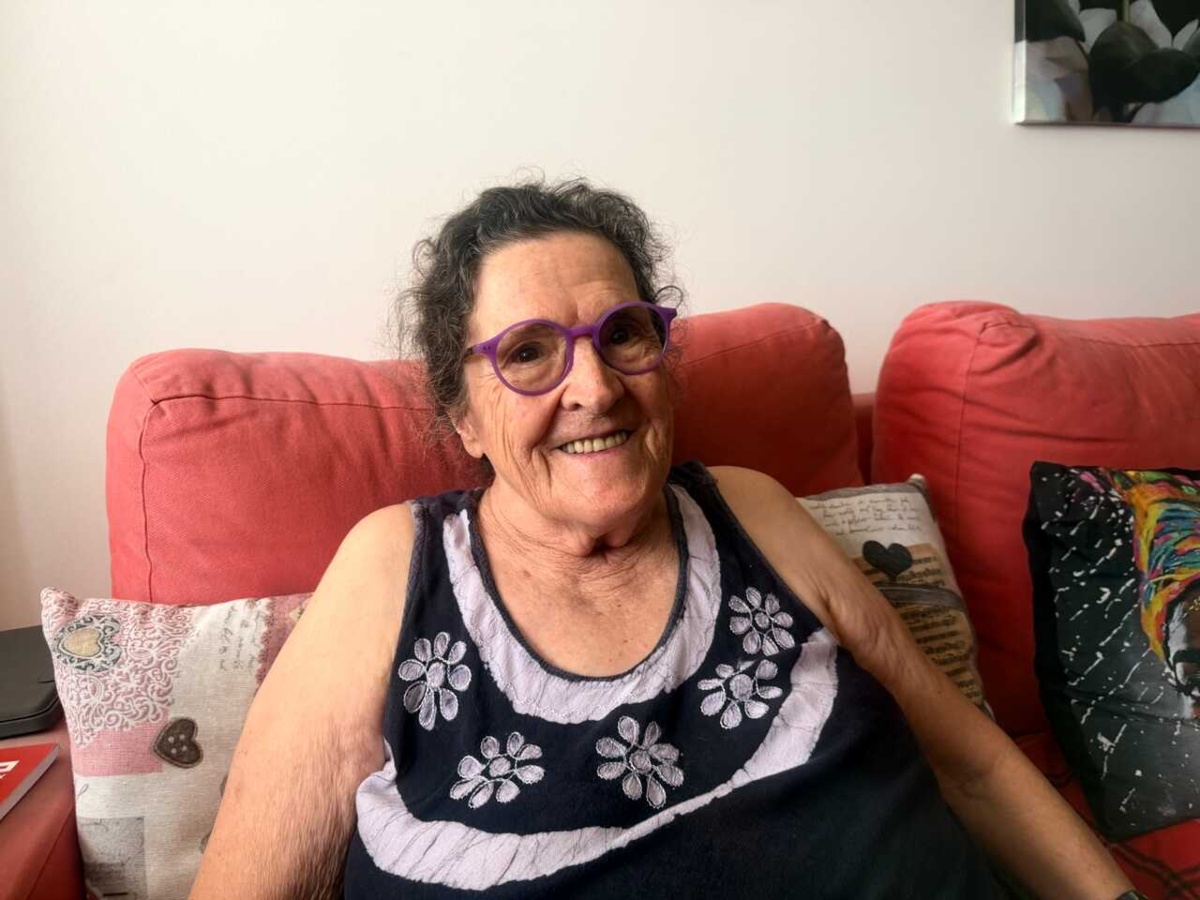
At the end of July, the Puerto del Rosario Town Council plenary session approved changing the name of Almirante Fontán Lobe Street to Lorenza Machín Alarcón Street. The decision honours one of Fuerteventura’s most prominent figures in social, trade union, feminist and cultural activism, and is another step towards complying with the Democratic Memory Law, which requires the removal from public spaces of names and honours that glorify Franco’s dictatorship.
The decision came just two weeks after La Voz de Fuerteventura interviewed Lorenza Machín during a stay on the island. In that conversation, the activist played down the personal recognition and focused instead on the affection she had received throughout a lifetime of commitment. “I already have the affection of the people of Fuerteventura. I feel it, and it’s mutual, because Fuerteventura taught me a lot and I believe I also contributed to Fuerteventura,” she said.
Machín recalled that she had never seen activism as a pursuit of personal recognition, but as a civic duty. “I’m one of those people who thinks that if you want to achieve something, you have to take to the streets and demand it. You won’t get anywhere at home,” said the octogenarian, a woman of firm convictions and a gentle voice.
From learning to read with Radio ECCA to political commitment
She came to Fuerteventura as a child. She had to start working early, leaving school behind so she could help at home. Fortunately, a few years later, she discovered Radio ECCA. It was undoubtedly one of the moments that shaped her life. There, she learnt to read and write, broadened her education and changed the way she understood the world. It also opened her eyes to the many injustices experienced under the dictatorship and, as she recounted, suffered directly by her own family.
“That education changed my life. I understood so many stories and decided I couldn’t stay at home,” she recalled, expressing gratitude to the organisation, which continues its work today under the name Ecca.edu, helping many people improve their education.
After the Communist Party and Comisiones Obreras were legalised, Lorenza Machín delivered one of the first public speeches by a woman in Fuerteventura. It was at a May Day event held at the wrestling arena in Puerto del Rosario. Afterwards, an elderly woman came up to her and said: “Thank you, Lorenza. You’re the first woman to take to the streets to stand up for us women.”
A life shaped by social struggles
Although her political activity began with the Communist Party, Lorenza Machín explained that she had always understood activism in much broader terms. “The struggle is like a chain with many links. You can’t strengthen just one and forget the others,” she said, describing her involvement in trade unionism, feminism, LGTBI rights, defending migrants, workplace equality and peace.
She worked at Fuerteventura General Hospital for 28 years, where she also held trade union responsibilities and took part in numerous campaigns for workers’ rights.
Theatre as a tool for change
A personal separation at the age of 58 led her to discover theatre, a discipline that would become one of the main vehicles for her activism.
She took up theatre to avoid taking medication and discovered “a tool for making people think”, she explained.
From then on, she developed productions focused on equality, gender-based violence, prostitution and sexual abuse, including Mujeres en la noche and Las que callamos. The plays were designed to prompt social reflection rather than provide mere entertainment.
She also recounted how, after retiring, she took out a loan to buy a camera and travel to Chile. She used the journey to read the manual and learn how to film. That was her goal, and she achieved it, although the accomplishment came with complications that even left lasting effects on her life.
She interviewed, filmed and edited the documentary Mapu Ñuke (Mother Earth), which was eventually completed. It is dedicated to twelve women committed to defending human rights, some from here and others from elsewhere.
“I regret nothing. I have real treasures in my home,” she said, recalling the project, despite the financial effort it involved.
Living true to herself
During the interview, she also spoke openly about the moment she decided to make her relationship with Carmen public, after a lifetime shaped by social conventions that did not reflect her true identity.
“If people loved me yesterday as Lorenza Machín Alarcón, today I have something more important to say: I’ve fallen in love with a woman, but I’m still the same Lorenza.”
She now lives with her wife, Carmen, in Gran Canaria, seeking the peace and quiet she needs while meeting the many commitments in an agenda that is still very full.
She takes part in all kinds of social events and campaigns organised by activist groups, while also making room for her artistic side.
Actress, writer, director… and, more recently, the “grandmother” that artist Quevedo is featuring to promote his Baifo Tour.
Lorenza needs to keep following her aspirations to feel alive and keep the spark shining in her eyes.
Along the way, she also fills notebooks and notepads with writings and poems, in beautiful, careful handwriting.
Her message is always there between the lines: “The most wonderful thing is to live with an awareness of who we are. Don’t let anyone tell you who you are or where you’re going. When the time comes, you’ll be able to say you lived as you wanted, with dignity.”
Source: La Voz de Fuerteventura