
 Tourism
 expands training and advice for Canarian businesses to reduce their carbon footprint
Tourism is expanding the training and advice it offers Canarian businesses to help them reduce their carbon footprint.
Redacción
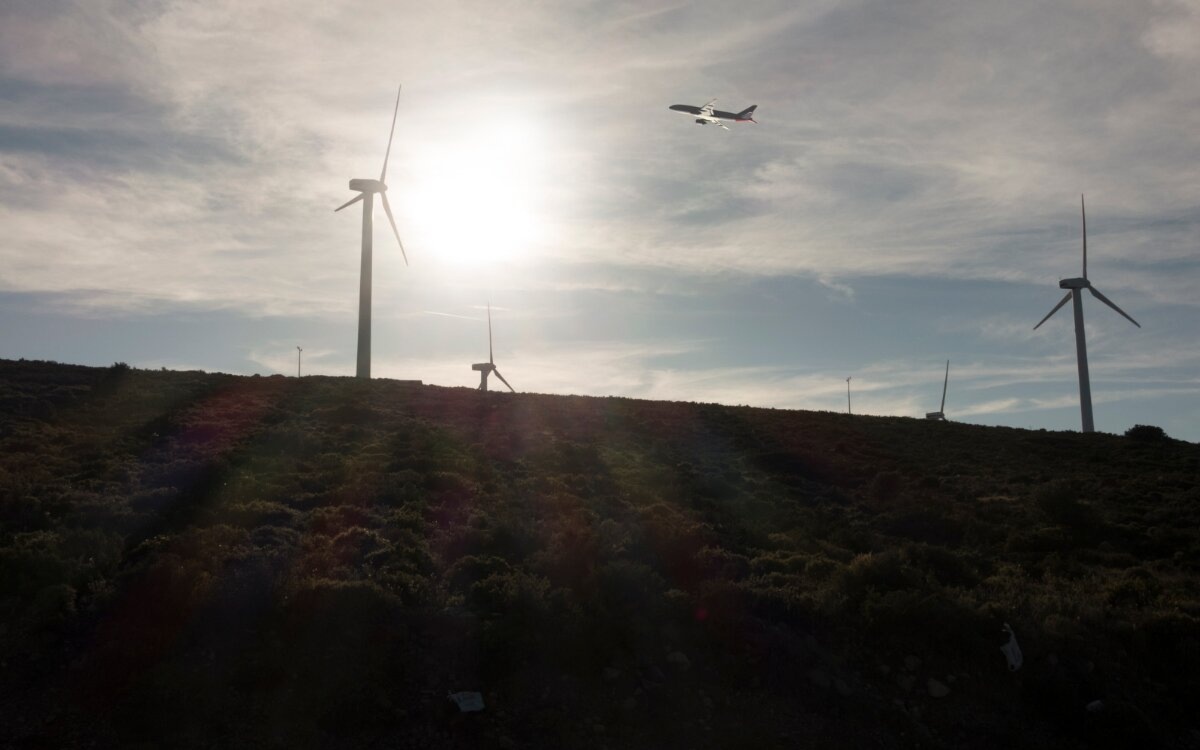
The Canary Islands Government’s Department of Tourism and Employment is continuing its strategy to advance environmental regeneration, climate adaptation and the decarbonisation of the destination, working alongside all tourism-sector stakeholders. To that end, the department led by Jéssica de León will expand the free training and advice it provides to businesses, helping them continue to measure, plan and reduce their emissions.
The Minister acknowledged this shared commitment at the opening of the fourth ‘Journey to the Decarbonisation of the Canary Islands Destination’ meeting, held in Lanzarote. Specialists and public- and private-sector representatives took part, sharing ideas on how to move towards a more resilient tourism model.
“For the past four years, we have adhered strictly to our commitment to the Glasgow Declaration, which called on all signatories to reduce the carbon footprint of Canarian tourism businesses. We must also comply with the Climate Change Act, which requires businesses to measure their carbon footprint from 2027,” the Minister said.
“Sustainability is a strategic priority that must be integrated into tourism planning in the Canary Islands. We are working to ensure tourism anticipates the effects of climate change and reduces its environmental footprint. Providing professionals in our economic engine with the tools and knowledge to do this is essential,” she said.
One such tool is ‘Journey to Decarbonisation’, a free digital initiative launched by Turismo de Islas Canarias. It helps tourism businesses and organisations measure their carbon footprint, set targets and plan emissions reductions. “While large corporations continue to make progress, we are closing the gap for those who need it most: small and medium-sized businesses,” the Minister explained.
‘Journey to Decarbonisation’ currently has 292 registered businesses, of which 131 have completed their carbon-footprint calculations. Turismo de Islas Canarias offers all of them the opportunity to book a one-to-one appointment with an environmental sustainability specialist to learn about the tool and ask questions about how to use it, with advice tailored to each organisation’s needs.
This training builds on the six in-person workshops and 33 online sessions held this year, which recorded 614 attendances in total. “We have supported the sector in measuring its emissions because that is the only way we can reduce them and closely scrutinise the impact the Canarian tourism industry has on our ecosystem,” the Minister concluded.
The advice and workshops will be complemented by the forthcoming launch of a training platform featuring on-demand reference materials. “The aim is to tailor this training even more closely and help more businesses complete their calculations and turn the results into practical measures,” said José Juan Lorenzo, managing director of Turismo de Islas Canarias.
The platform will launch with a section titled ‘How to decarbonise your tourism business’, offering practical guidance on measuring, planning and reducing emissions. To make the material applicable, it will link these calculations to everyday management decisions involving energy, facilities maintenance, mobility, waste and contracted services. The content will also be tailored to different types of businesses, with a focus on the decisions specific to each activity.
Collaboration across science, business and society
The fourth ‘Journey to the Decarbonisation of the Canary Islands Destination’ meeting featured naturalist, environmental communicator and sustainability consultant José Luis Gallego, who delivered a talk titled ‘Nature as an ally and a responsibility’. Gallego also chaired a discussion with José Juan Lorenzo covering a range of topics, including the need to establish partnerships between public administrations, businesses, research centres, social organisations and the public to address climate action in a structural way.
The blue tourism agreement is one example of this approach. Turismo de Canarias signed it with the Spanish National Research Council (CSIC) and the universities of La Laguna and Las Palmas de Gran Canaria to improve understanding of tourism’s environmental impacts and bring research findings to the sector. With total funding of €4.2 million, six projects were carried out. Among other advances, they defined 50 geotourism micro-destinations, identified 32 strains of marine microorganisms, installed nine underwater listening stations and collected around 240 daily readings on water quality.
Regnext was another example of collaboration between public bodies and between the public and private sectors raised at the meeting. The programme, promoted by Turismo de Canarias, aims to channel voluntary contributions from businesses, public administrations, visitors and the public into projects with measurable environmental or social outcomes. “This initiative connects the destination’s climate action with ecosystem recovery and the wellbeing of local communities,” the managing director said.
During the discussion, Lorenzo also presented the latest estimates of the tourism sector’s carbon footprint. In 2025, emissions from tourism activity at the destination were estimated at 1,055,001 tonnes of CO₂ equivalent, 3% higher than in 2024. The estimated emissions per tourist arrival were 57.38 kg of CO₂e, down 0.4%. Activities accounted for 40% of emissions (424,131 tonnes), followed by accommodation, at 31% (326,107 tonnes), and mobility during visitors’ stays, at 29% (304,763 tonnes).
As for aviation, emissions associated with flights linked to the Canary Islands were estimated at 6,572,149 tonnes of CO₂e last year, up 4.6% on 2024 and 24% above 2019. In this context, Lorenzo recalled that a meeting had been held bringing together producers and buyers of sustainable aviation fuel (SAF), airlines, specialists and public-sector representatives. They identified opportunities to develop a value chain on the islands and discussed challenges including the availability of raw materials, logistics, costs and funding.
The meeting also featured the presentation of the Climate Action Plan for tourism activity in Lanzarote and La Graciosa by Héctor Fernández, chief executive of SPEL-Turismo Lanzarote. “Tourism decarbonisation must translate into concrete action. In Lanzarote and La Graciosa, we are moving towards a more sustainable and resilient tourism model, with a roadmap that integrates climate action into destination management. It includes projects already under way, such as the intelligent mobility system to cut emissions and improve traffic management, and the Arrecife urban renaturalisation pilot, which aims to restore green spaces and improve quality of life,” Hernández explained.
Helena Lorente, Project Director at Institut Cerdà, also took part, discussing how tourism can respond to climate change through mitigation and adaptation. Finally, Mónica Palacios, Director of Product Promotion, Corporate Communications and Crisis Management at Turismo de Islas Canarias, chaired a panel titled ‘The destination we want to be: people and projects committed to sustainability in the Canary Islands’. It brought together five representatives of projects featured in the fifth wave of ‘The destination we want to be’, a campaign showcasing 38 sustainable projects developed across the eight islands. The projects address a wide range of issues, including workplace wellbeing, inclusion, renewable energy, mobility and biodiversity conservation.
Source: La Voz de Fuerteventura

