
One in eight people in the Canary Islands has had suicidal thoughts, mental health expert says
Psychiatrist Javier Acosta Artiles discusses suicide in the Canary Islands and Fuerteventura, its links to economic insecurity and housing, and calls for greater involvement across society in prevention.
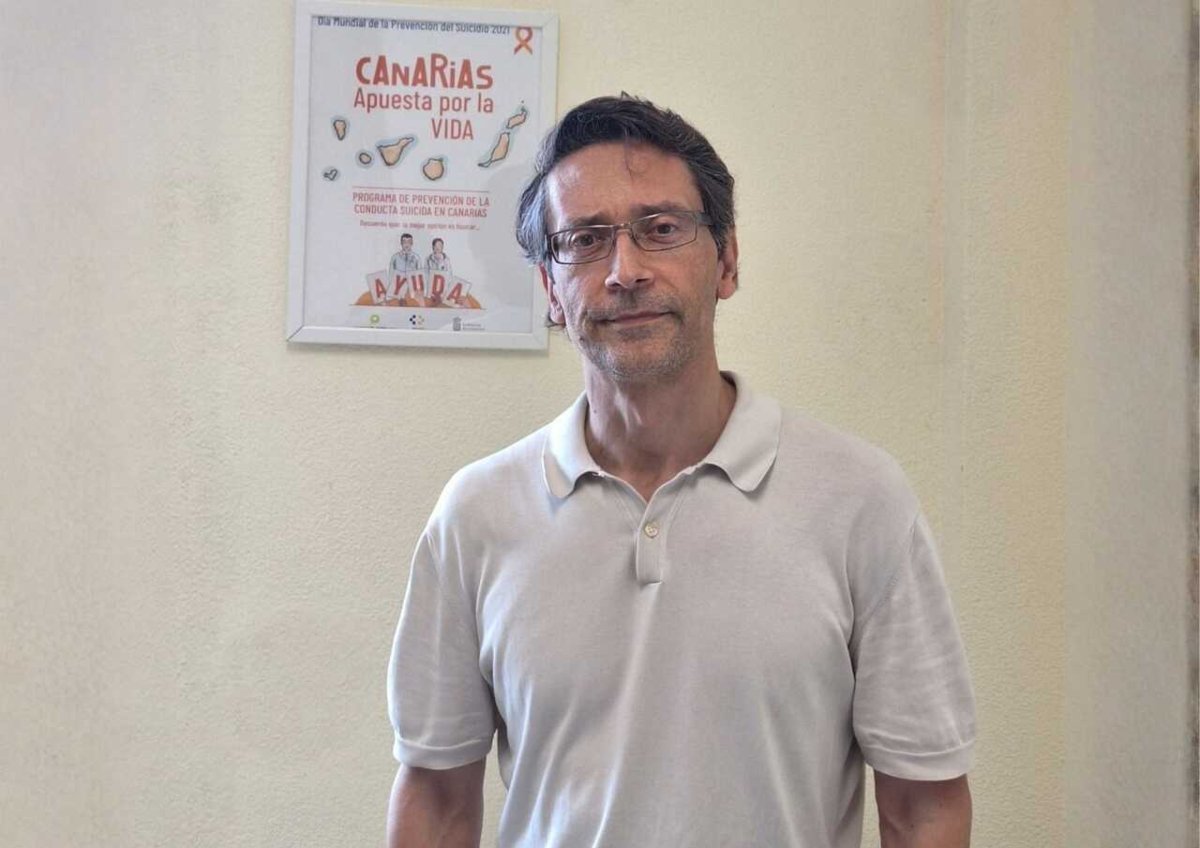
Some 13.1% of the Canary Islands population have had suicidal thoughts at some point in their lives. The figure reflects the scale of a public health issue that also requires action to address people’s economic and social circumstances.
That is the warning from psychiatrist Francisco Javier Acosta Artiles, a specialist with the Mental Health and Addictions Service of the Canary Islands Government’s Directorate General for Mental Health and Addictions, in an interview with La Voz de Fuerteventura.
“It is a high figure,” says the specialist, stressing that suicide is not an issue confined to healthcare. Prevention requires tackling factors such as job insecurity, economic uncertainty, difficulties accessing housing, unwanted loneliness and a lack of social support.
He also notes that the Canary Islands has the second-highest proportion of people aged 15 or over with mental health problems recorded in primary care: 33.9%, compared with a national average of 20.8%, according to data provided by the Canary Islands Health Service.
The difference, he explains, is due to a range of circumstances, though he attaches particular importance to the social determinants of mental health. “When we analyse these variables and compare the Canary Islands with the national average, unfortunately, most of these indicators are less favourable here,” he says.
The psychiatrist recalls that the largest increase in suicides in the past two decades occurred between 2011 and 2012, coinciding with one of the most severe periods of the economic crisis. In his view, this trend underlines the influence of socio-economic factors.
Fuerteventura’s rate is below the regional figure
Despite the concern raised by the figures, the specialist highlights that suicides in the Canary Islands have fallen by a cumulative 22.4% over the past two years, a trend he links to the preventive measures introduced.
The latest definitive annual rate he cites is for 2024, at 10.09 suicides per 100,000 inhabitants.
In Fuerteventura, the consolidated rate stands at 6.72 cases per 100,000 inhabitants. Acosta Artiles explains that, given the island’s population size, a change of just a few cases can cause significant statistical fluctuations.
He therefore recommends using consolidated rates over five years, which provide a more representative picture of how the problem is changing.
Older people among the most vulnerable groups
The psychiatrist also draws attention to older people, a group that receives too little visibility compared with the prominence given to young people in public debate. “Older people tend to have the highest suicide rate,” he says.
Factors that increase their vulnerability include chronic illness, persistent pain, loss of independence, the death of loved ones and loneliness.
Warning signs, he says, include expressions of hopelessness, talking about suicidal thoughts, unexpected farewells and certain changes in behaviour that may indicate a person is at risk.
“Don’t wait until you reach breaking point to ask for help”
Javier Acosta Artiles believes that one of the main challenges still to be addressed is extending prevention beyond healthcare services.
“Suicide has multiple causes, and preventing it requires the involvement of every sector and every institution in society,” he says, citing recommendations from the World Health Organization and Spain’s Ministry of Health.
He is calling for greater involvement from the education, justice, housing and child welfare sectors.
“If we confine ourselves to healthcare, we can do a lot, but we won’t reach enough of the population,” he warns.
The specialist ends with a message for people experiencing intense emotional distress: “Don’t wait until you reach breaking point to ask for help.”
He notes that health centres are a first point of contact and that the free 024 helpline is available 24 hours a day to people at risk and their families. In an immediate emergency, he recommends calling 112.
Source: La Voz de Fuerteventura