
Territorial Cohesion to restore 50 hectares at El Cotillo to offset Origo Mare’s environmental impact
The Canary Islands Government and La Oliva Town Council have agreed to restore a degraded area of Fuerteventura’s northern coastline as compensation for the occupation of four hectares of protected land at Casas de Majanicho. The agreement includes removing roads and restoring the dune habitat.
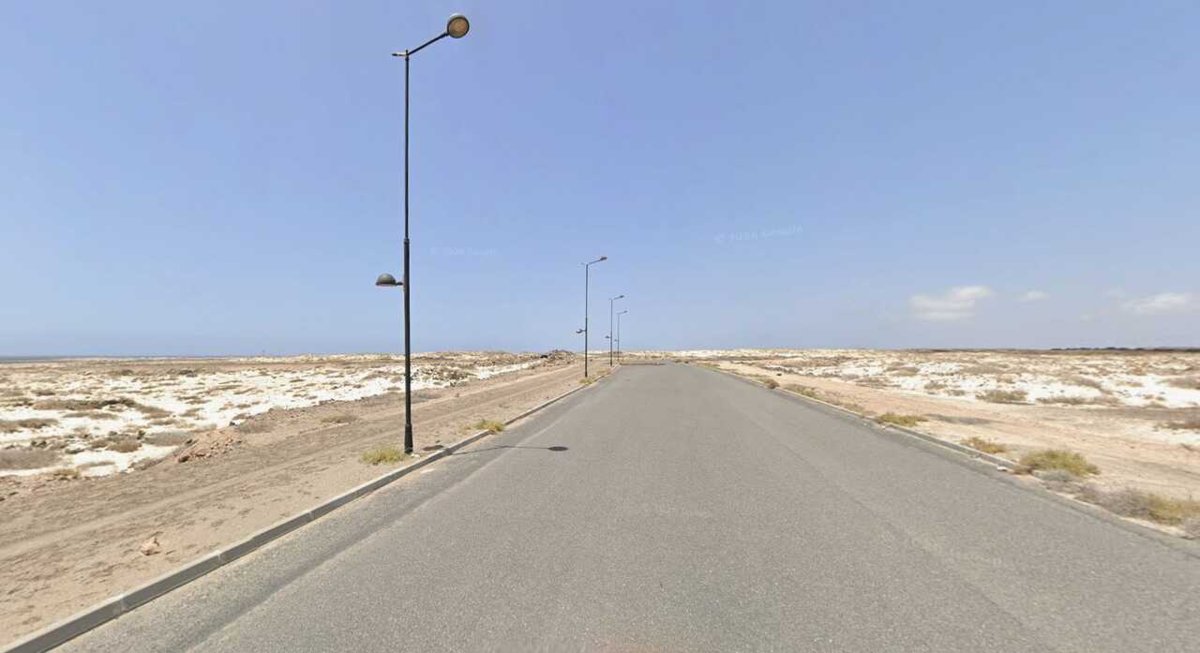
The Canary Islands Government, through the Department of Territorial Policy, Territorial Cohesion and Water, headed by Manuel Miranda, and La Oliva Town Council have signed an agreement to carry out environmental restoration across 50 hectares at Costa del Faro, near El Cotillo, to offset the impact of the Origo Mare development at Casas de Majanicho. The agreement sets out the responsibilities of both administrations in delivering the work.
The project is one of the compensatory measures set out in the environmental impact statement approved in February 2023 for the Casas de Majanicho development.
Specifically, it aims to compensate for the occupation of four hectares within the Costa Norte de Fuerteventura Special Protection Area for Birds (SPA) by restoring 50 hectares of the same habitat type within the same protected area.
The project will take place in the former SAU-8 Costa del Faro urban development sector, an area degraded by road infrastructure.
The planned work includes removing the existing roads, reopening the former link to Faro del Tostón to vehicle traffic and restoring the land to its original contours.
The aim is to restore the coastal mobile dune habitat, known as white dunes, within the protected area on Fuerteventura’s northern coast. The agreement also provides for the removal of rubble identified in the Northern Restoration Plan where it falls within the project area.
Background: Environmental compensation arising from the Majanicho case
The project stems from the environmental proceedings relating to the Casas de Majanicho development, built between 2002 and 2007. The partial development plan that authorised the project was later annulled by the High Court of Justice of the Canary Islands.
The agreement states that the European Commission sent Spain a letter of formal notice on 7 December 2017 as part of infringement proceedings.
Various demolition and restoration options were considered in this context. The solution ultimately adopted, however, was to retain the existing development, alongside compensatory work in several natural areas in northern Fuerteventura.
This was set out by the Regional Environmental Assessment Commission in an ex post environmental impact statement, which includes the restoration of Costa del Faro. The planned restoration area is more than twelve times the four hectares occupied by Origo Mare within the protected area.
Town Council to process the project; Canary Islands Government to carry out the work
La Oliva Town Council must complete the administrative procedures needed to approve the project and make the land required for the work available to the Canary Islands Government, whether publicly or privately owned.
It will also be responsible for technical supervision and health and safety coordination.
The Department of Territorial Policy, Territorial Cohesion and Water has, in turn, undertaken to carry out all the work set out in the approved project, either directly or through the relevant public procurement procedures.
The regional government has already commissioned the public company Gesplan to draft the restoration project.
Source: La Voz de Fuerteventura