
 La Oliva
Fuerteventura Island Council steps up prevention efforts against Mexican cochineal with training session in La Oliva
The session, led by Luis Barroso, head of Plant Health at GMR, forms part of the Island Council’s efforts to protect Fuerteventura’s prickly pear cacti.
Redacción
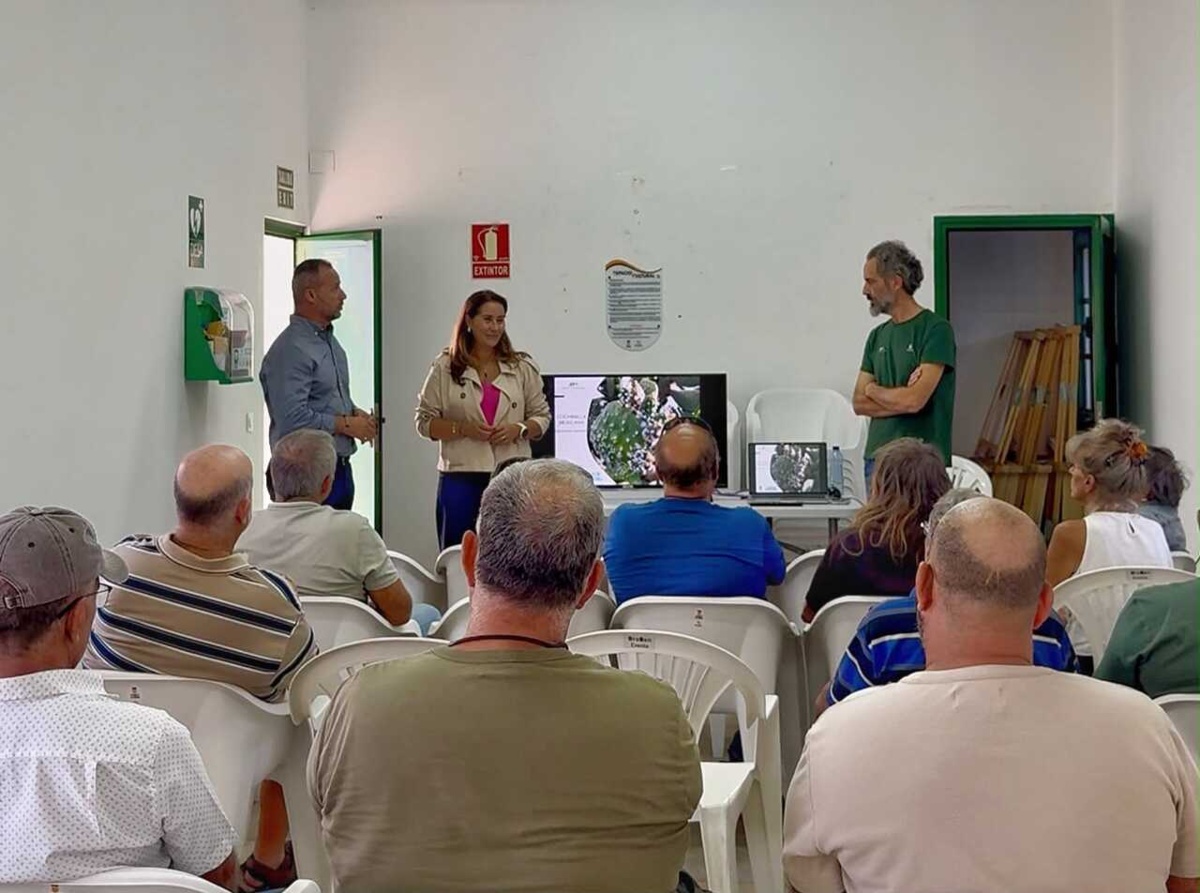
Fuerteventura Island Council held an information session on Mexican cochineal on Wednesday at the La Caldereta Cultural Centre in La Oliva. The aim was to explain the species’ characteristics, the damage it causes to prickly pear cacti and the measures needed to prevent its spread.
The session was organised by the Island Council’s Department of Agriculture, Livestock and Fisheries, in collaboration with the Canary Islands Government’s Plant Health Service and its in-house entity GMR (Gestión del Medio Rural), as well as La Oliva Town Council.
Island Council president Lola García highlighted the corporation’s commitment to protecting the primary sector and the importance of public cooperation in tackling this threat. “It is essential to remain highly vigilant and report any sightings to protect Fuerteventura’s countryside,” she said.
According to Enrique Pérez, the island councillor responsible for the area, the session forms part of Fuerteventura Island Council’s work to monitor and keep watch for Mexican cochineal. “Following the discovery of outbreaks that have already been brought under control in some areas in the north of the island, the Department of Agriculture, Livestock and Fisheries has worked with the Canary Islands Government and GMR to inspect various areas and implement the relevant control measures.”
Also present was Rubén González, La Oliva Town Council’s councillor for the primary sector.
Luis Barroso, head of Plant Health at GMR (Gestión del Medio Rural), led the training session, which explained how to identify Mexican cochineal (Dactylopius opuntiae). The species affects prickly pear cacti and is recognisable by dense accumulations of whitish, cotton-like filaments covering the pads. These filaments protect the insect and distinguish it from other cochineal species, including the one traditionally used to produce the natural dye carmine.
This pest can cause yellow spots and areas of dead tissue on the pads and fruit, weaken the plant and lead to its parts falling off prematurely. In severe infestations, prickly pear cacti can die. The species also spreads readily, particularly through the wind, making it essential to spot the first signs and act quickly.
The Island Council stresses the importance of remaining vigilant and avoiding the movement of affected plant material, which could help spread the pest. Anyone who suspects Mexican cochineal is present should inform the Agriculture, Livestock and Fisheries Service by calling 928 532 035 or 928 531 184, or emailing agricultura@cabildofuer.es or ganaderia@cabildofuer.es.
The Agriculture, Livestock and Fisheries Agency in Gran Tarajal can also be contacted on 928 870 782 or by emailing ext_gt@cabildofuer.es.
Source: La Voz de Fuerteventura

