
Mario Cabrera proposes lifting the mussel-harvesting ban after positive findings on the species’ recovery
Mario Cabrera proposes lifting the mussel-harvesting ban after positive findings on the species’ recovery.
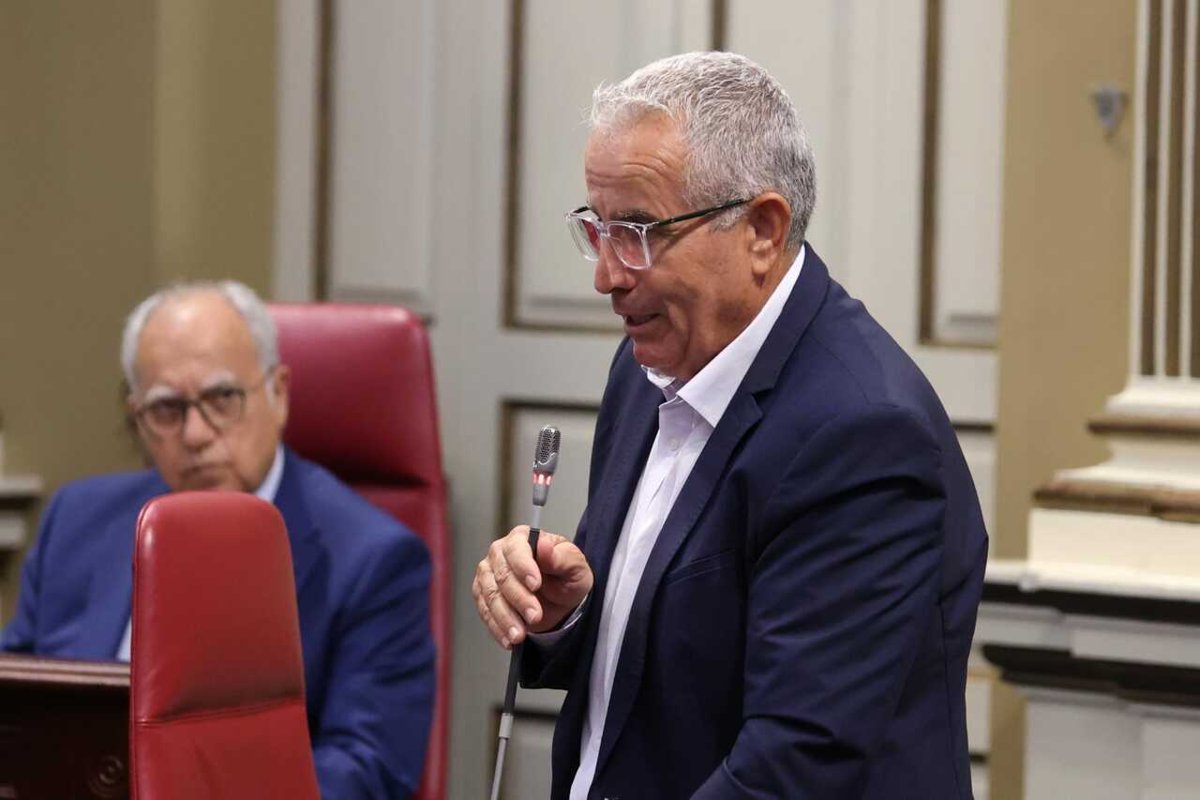
Mario Cabrera González, a member of the Canarian Nationalist Parliamentary Group (CCa), spoke in the plenary session of the Parliament of the Canary Islands to propose lifting the ban on harvesting mussels (Perna perna) in Fuerteventura, in view of the species’ recovery and the ability of new technologies to tackle illegal harvesting.
According to the deputy, the issue “has been discussed several times by the Agriculture, Livestock, Fisheries and Food Sovereignty Committee”. Most recently, in December 2025, Cabrera asked the minister responsible for the portfolio, Narvay Quintero, to commission a study to determine whether the mussel-harvesting ban could be lifted on Fuerteventura.
An activity with deep historical roots in Fuerteventura
During his address, Mario Cabrera noted that shellfish gathering is a pre-Hispanic activity with deep roots on islands such as Fuerteventura, as shown by “the shell middens scattered across the territory, mainly beside archaeological sites”, he added.
Mussel harvesting has been banned since 2004, following a decline in the species along Fuerteventura’s coast caused by illegal harvesting, which had put pressure on this endemic and fragile species.
Cabrera recalled that Fuerteventura Island Council itself had promoted the restriction after the species suffered a substantial decline in numbers. The ban was formalised by an order dated 16 July 2004, establishing a closed season for harvesting Canarian mussels along the coast of Fuerteventura.
During these 22 years of prohibition, various studies and research projects have sought to understand the species’ behaviour and its potential for recovery and cultivation. None achieved the desired result.
However, “we have seen the regeneration the species has undergone. Nature itself, together with increased monitoring and surveillance, has made this recovery possible”.
The Perna 360º FV project and the recovery of the mussel
Mario Cabrera also called for the opportunity offered by the Perna 360º FV project to be seized. The project is being carried out by the Canary Islands Agency for Research, Innovation and the Information Society (ACIISI), in collaboration with the Department of Agriculture, Livestock, Fisheries and Food Sovereignty, IU_ECOAQUA_ULPGC, PLOCAN and Fuerteventura Technology Park (PTFUE). It focuses on cultivation and aerial surveillance to accelerate the recovery of Fuerteventura’s mussel population.
Experimental lifting of the ban during two periods
In response, Minister Narvay Quintero said progress had already been made in the study of mussel recovery along Fuerteventura’s coasts. This would make it possible to assess the effects of experimentally lifting the ban during two periods: from today until 30 November and, subsequently, in May and June 2027.
Quintero said any lifting of the ban would have to comply with current regulations. Recreational shellfish gatherers will need the appropriate licence, and the activity will be restricted to weekends and public holidays, with a limit of three kilograms per person per day. Professionals, meanwhile, will be able to work every day, up to a limit of 25 kilograms a week.
An appeal for responsible shellfish gathering
Cabrera thanked the Department for its work on the issue and said the public must now act “responsibly and engage in shellfish gathering in a conscious way that respects the balance of the ecosystem, so that progress in restoring mussel populations on the island can be sustained”.
“It is a good opportunity to study human behaviour and its impact on the species, as well as to advance its recovery and strengthen coastal surveillance using drones (UAVs) from Fuerteventura Technology Park,” he concluded.
Source: La Voz de Fuerteventura