
Ana Pérez denounces that Puerto del Rosario is the only council in Fuerteventura funding wigs for cancer patients
On Breast Cancer Day, Ana Pérez denounces the lack of support from town councils to fund wigs for cancer patients and highlights their emotional importance. The association has to sell bracelets to cover the cost.
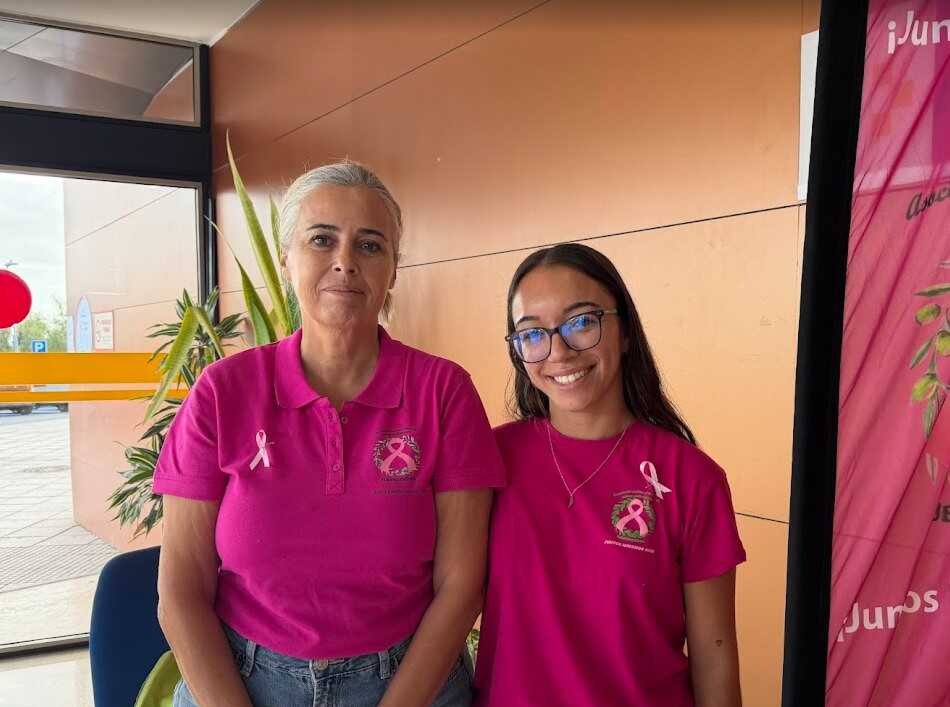
Losing their hair during cancer treatment can become one of the most difficult moments for a woman diagnosed with cancer. Being able to look in the mirror and recognise herself, go out without feeling watched, or maintain her usual appearance in front of her children and family is worth far more than aesthetics.
That is the view of Ana Pérez, president of the Fuerteventura Association Against Metastatic Breast Cancer. This Monday, 19 October, International Breast Cancer Day, she used an interview with La Voz de Fuerteventura at the island’s General Hospital to denounce the limited involvement of local authorities in funding wigs for cancer patients.
“At present, there isn’t a single town council apart from Puerto del Rosario that subsidises wigs,” she says, pointing out that the association supports many patients from different municipalities on the island.
“It’s not a wig you wear at carnival; it’s you”
Ana Pérez stresses that this is one of the services patients value most, even more than other support provided by the association, such as cancer rehabilitation physiotherapy.
“It’s not a wig you wear at carnival; it’s you. It’s finding yourself when you get up, look in the mirror and recognise yourself,” she explains.
The president describes how women regain some of their confidence when they can maintain their appearance during treatment. “It’s hugely important that they can find themselves when they look in the mirror, when they go out to take their children to school; that they can see themselves, and that people don’t look at them with pity when they go to the supermarket.”
She also recalls how moved patients are when they receive their wigs, which are fitted by Sonia, the hairdresser who works with the association.
The association’s president makes no secret of her frustration when discussing how this service is funded and the efforts volunteers make to raise the necessary money.
During Fudenas, held over the past few days, the association ran a fundraising stall for three days. Its members spent up to twelve hours selling bracelets to raise funds.
They raised €1,221, a sum that, she explains, is enough to fund just two wigs for patients who do not live in Puerto del Rosario.
Ana Pérez believes municipal authorities should take on greater financial responsibility, and says that no large budget allocations are needed to guarantee this service. “We’re not asking them for that much, Pía. Perhaps €6,000 for the whole year,” she says, before asking directly: “Are you going to tell me a town council doesn’t have €6,000?”
In her interview, she recalls some of the most painful situations families face during treatment: husbands having to shave their wives’ heads, children watching their mothers lose their hair, and patients wearing a wig so as not to worry their elderly parents.
A 216% increase so far this year
The appeal comes at a time when the association’s activity is rising sharply. It will mark five years since its official launch on 22 October.
According to figures provided by its president, the organisation has grown by 216% so far in 2026.
About a month ago, it was supporting between 138 and 140 patients, a figure that, she says, has since increased. She also puts the total number of people supported at close to 800, not counting all the family members who also receive help.
Although the association was founded to support people with metastatic breast cancer, it now assists men and women with any cancer diagnosis. Around half of its patients have breast cancer.
Its services include home-based cancer rehabilitation physiotherapy, psycho-oncology, aesthetic medicine, social work, sporting activities, and help covering certain pharmaceutical treatments and orthopaedic products.
Pérez particularly highlights home physiotherapy, which saves patients in municipalities far from Puerto del Rosario from having to travel, as well as online psychological support.
All services are completely free for patients and their family members, who do not need to join the association.
The organisation has three employees, including two social workers, Ruth and Mónica, and an administrative coordinator. They are joined by around 40 volunteers.
Concern that grants may arrive too late
Looking ahead to the 2027 budgets, Ana Pérez also expresses concern about whether professional services can continue.
She is particularly concerned about the two social workers, whose work she considers essential to supporting patients and their families.
“I hope the grants come through sooner, so I don’t find myself having to tell these two wonderful women on 31 December that they have to stop,” she says.
The president hopes to maintain the support of the Canary Islands Government to sustain some of the social work and physiotherapy services, as well as support from the Island Council and town councils.
On 19 October, Pérez offers a message of hope to people facing cancer and their families, encouraging them to trust medical professionals, stay active as far as they are able, and accept support.
“It’s difficult, very difficult, but it can be done,” she concludes.
Source: La Voz de Fuerteventura