
Salinas del Carmen fleur de sel named Canary Islands’ Best Sea Salt 2026 at Agrocanarias
The Fuerteventura product also received the award for Best Organic Sea Salt, while the Best Innovation, Image and Presentation award went to fleur de sel from Salinas de Janubio in Lanzarote.
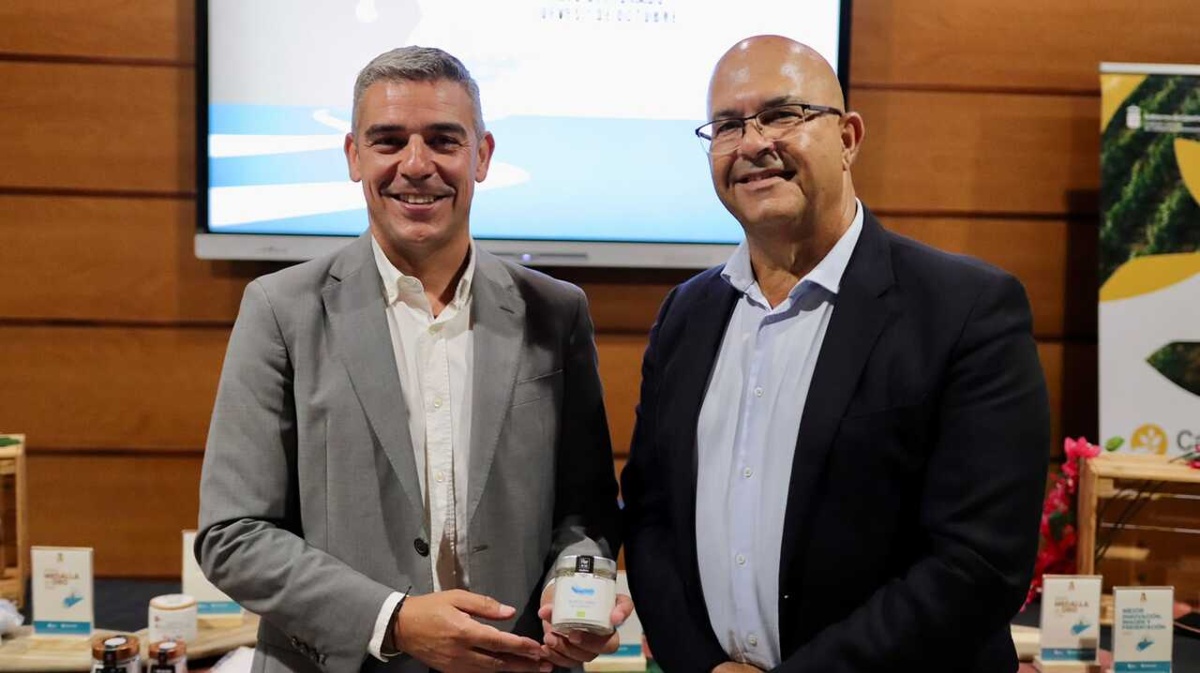
Fleur de sel from Salinas del Carmen in Fuerteventura, produced by Proasur Cultural Management, has been named Canary Islands’ Best Sea Salt 2026 at the 2026 Agrocanarias Official Sea Salt Competition. The competition is organised by the Canary Islands Government, through the Canary Islands Institute for Agri-food Quality (ICCA), in collaboration with the Lanzarote Island Council, to recognise and promote the Archipelago’s finest products.
Produced using traditional methods on the coast of Antigua, in an area declared a Site of Cultural Interest (BIC), it also received the special award for Best Organic Sea Salt in the Canary Islands 2026 and a Grand Gold medal. It repeated the same honours it won in the previous edition of the competition. The company also won a Gold medal in the Virgin Sea Salt category this year.
The 2026 Best Innovation, Image and Presentation award went to fleur de sel from Salinas de Janubio in Lanzarote, which also received a Grand Gold medal in that category.
In the Virgin Sea Salt category, the product from Salinas de Janubio in Lanzarote won a Grand Gold medal. In the fleur de sel category, Salinas de Fuencaliente in La Palma and Salinas de Bocacangrejo in Gran Canaria each received a Gold medal.
In total, alongside the three special awards, the tasting panel awarded six medals: three Grand Gold and three Gold. This brings the total number of honours to nine. By island, Fuerteventura received four awards, Lanzarote three, and La Palma and Gran Canaria one each.
The Minister for Agriculture, Livestock, Fisheries and Food Sovereignty, Narvay Quintero, and ICCA director Luis Arráez Guadalupe announced the jury’s decision today, Thursday 1 October. The competition was held on 17 September at Islote de Fermina in Arrecife. A total of twelve sea salts took part, from the six saltworks currently operating in the Archipelago: three in Gran Canaria and one each in Fuerteventura, La Palma and Lanzarote.
At the event, Quintero said: “The fact that all the products recognised have received either a Grand Gold or a Gold medal reflects the level of excellence achieved by sea salts from the Canary Islands, as well as the efforts of those who work every day to preserve and improve this activity and its products.”
The minister noted that around 2,700 tonnes of this product are now made on the islands using artisanal techniques passed down through generations. As he said, it “forms part of our heritage, our landscape and our culture, but it is also an economic activity with the potential to generate value locally”. He added: “The Archipelago’s saltworks have successfully complemented traditional production with initiatives linked to gastronomy, tourism and public engagement. These support direct sales, generate additional income and bring residents and visitors closer to the value and distinctive qualities of these products.”
ICCA director Arráez said: “The participation of all six active saltworks in the Canary Islands means this competition provides a very comprehensive picture of production across the islands and helps showcase its diversity and quality.” He also noted that “Agrocanarias not only recognises the finest products but also serves as a promotional and marketing support tool for the award-winning businesses, which can display these marks on their products and strengthen their position in the market.”
Best Sea Salts of the Canary Islands 2026
The salts entered in the competition were assessed in a blind tasting by a panel of eleven specialists in the analysis of agri-food products. The sensory assessment focused primarily on aroma, flavour and texture, as well as other characteristics such as colour, consistency and grain size—the size of the salt particles.
Until the next edition of the competition, the winning businesses may display the relevant award label on the packaging of their prize-winning products. Labels or packaging for the recognised products will also be displayed at ICCA facilities and at promotional events organised by the Institute.
Its products are natural and hand-harvested using traditional artisanal methods that preserve Fuerteventura’s landscape and cultural heritage.
Bright white in colour, its fleur de sel has a low sodium chloride content and contains trace elements such as magnesium, zinc and calcium, making it a healthier substance than processed table salt.
Its extraction process has distinctive features. Seawater is collected when waves hit the rocks, creating foam with a high salt concentration that is stored in the salt basin. The water is then channelled to the evaporation ponds through a natural process involving the tide, wind and gravity, without machinery being used to extract it. Once the right conditions have been reached, the master salt worker directs the water into the crystallisation pans, where the sun gradually evaporates it and the salt settles on the bottom.
This artisanal process has been maintained for centuries and produces a salt that retains its natural qualities. It has a mild flavour, with no bitterness or dry sensation on the palate, and contains no additives.
Source: La Voz de Fuerteventura