
 Business and news
What the plate doesn’t tell you: the rules safeguarding the nutritional quality of school meals in Fuerteventura
Behind every school meal in Fuerteventura is a demanding set of rules and a team that turns them into real food. Royal Decree 315/2025 sets the nutritional criteria school canteens must meet, from serving seasonal fruit and vegetables to how often pulses, fish and wholegrain products appear.
Redacción
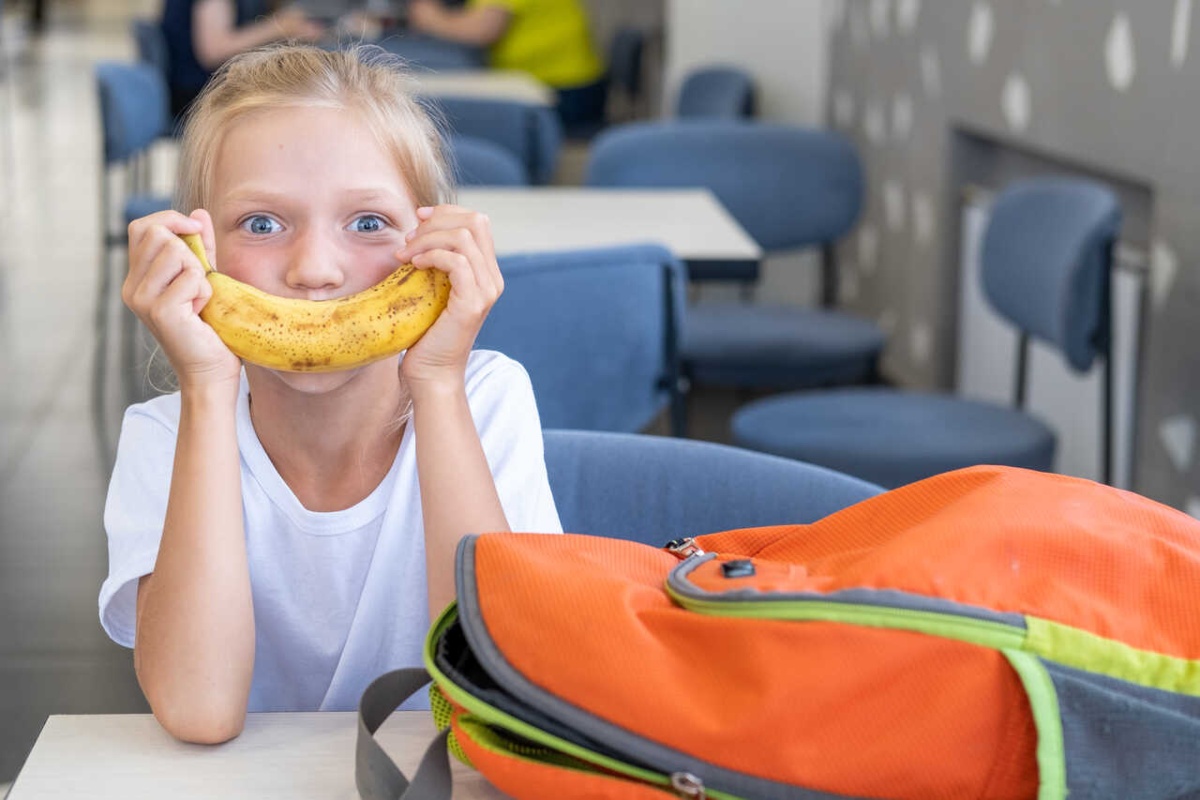
At lunchtime, no one in a school canteen is thinking about a decree. Pupils want to know whether there are lentils, whether there is fruit and whether fish is on the menu today. Yet what arrives on each tray in Fuerteventura is guided by rules that determine how often each food appears and the criteria used to plan the menu.
This is Royal Decree 315/2025, which is applied in the Canary Islands through Programme 16 (P16) of the Childhood Obesity Prevention Plan.
Rules you can see on the plate
Royal Decree 315/2025 translates Law 17/2011 on Food Safety and Nutrition into specific requirements for school canteens. At least 45% of fruit and vegetables must be in season. Pulses must be served once or twice a week, and fish between once and three times a week. Wholegrain products must be served at least twice a week, iodised salt must be used, and pre-prepared foods are limited to a maximum of one serving a month.
In practice, that means fewer ultra-processed foods, more fresh produce and menus planned week by week with a level of precision that leaves little room for improvisation.
It operates as an active monitoring system: menus are reviewed, technical justification is requested, and the food offered at schools across the Canary Islands is continually assessed.
A regulation cannot cook. For Royal Decree 315/2025 to make it onto the plate, a team of dietitians and nutritionists has to design, review and justify each menu, and be ready to respond to any inspection or audit.
In Fuerteventura, where Albi Canarias manages the school canteen service at virtually all schools and early-years centres, this technical work is coordinated with the system for preparing and distributing meals.
Most schools do not have their own kitchens, so the predominant model on the island is for food to be transported from a central kitchen. This requires planning to maintain nutritional and quality standards throughout the process, from preparation to service at each school.
It is the least visible part of the work, and also the most delicate. Meeting the percentages is only the beginning. Recipes must be familiar, pupils must accept the dishes, and the menu has to work in the day-to-day reality of the canteen, not just on paper.
The requirements are more demanding, but consistency matters just as much, with the same quality standards maintained across all schools.
For school leadership teams, knowing that someone is overseeing what is served each day changes how they experience the canteen.
Alba María Guerra Molina, headteacher at CEIP Puerto Cabras, explains: “Knowing there is a programme that genuinely checks what the children eat gives us great peace of mind. We are not relying on trust alone; there is real oversight behind it.”
That peace of mind extends to families too, who are increasingly asking about where ingredients come from, the nutritional criteria and how allergies and intolerances are managed.
Royal Decree 315/2025 does not answer all those questions on its own, but it requires a technical framework capable of doing so.
From percentages to habits: the canteen as a place of learning
The rules go beyond figures, emphasising that healthy eating should be part of each school’s educational project.
Eating pulses regularly, recognising seasonal fruit and understanding that fish is not a once-a-week exception are lessons built into the school routine as well as the menu.
That is how Albi Canarias sees the canteen in Fuerteventura: as an educational space where food is organised with technical rigour.
With between 90% and 95% of its suppliers coming from Fuerteventura, Lanzarote and Gran Canaria, the combination of local produce, familiar recipes and the criteria set out in Royal Decree 315/2025 helps maintain a balance between regulatory requirements and what pupils are actually willing to eat.
Meeting Royal Decree 315/2025 on the island means reviewing supplier contracts, strengthening traceability and maintaining continuous internal checks at every stage of the service, from menu design to the documentation required for any inspection.
Albi Canarias has incorporated the programme into all its operations in Fuerteventura.
Perhaps that is why the best work is the kind that goes unnoticed. No one in the canteen pays attention to the decree, yet it is there—in the lentils, the seasonal fruit and the fish on the menu.
Every day, in every school in Fuerteventura, the meal served reflects technical criteria, constant oversight and a genuine commitment to the health of the island’s children.
That is the kind of trust you do not advertise. You serve it.
Source: La Voz de Fuerteventura
You may also be interested in
Business and news Business and news
The mark teachers leave
 Business and news