
Rosa Guerrero: “There is a lack of understanding of how human beings function biologically, emotionally and mentally”
Do we know how to listen to what our bodies are telling us? Do we recognise the signals they send before physical or mental health problems arise? Therapist Rosa Guerrero, director of Posición Cero in Antigua, has more than four decades of experience in wellbeing and body therapies. She warns of how little we know about our own bodies and calls for greater investment in health education.
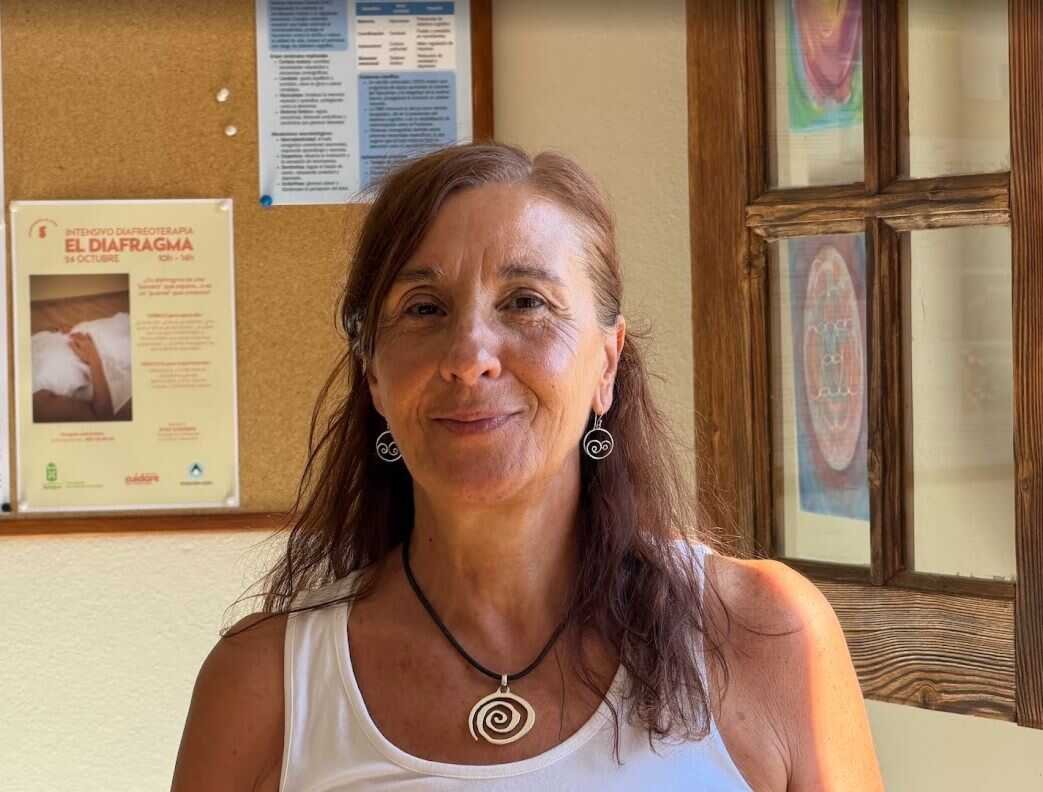
Rosa Guerrero, director of Posición Cero in Antigua, is also one of the members of the recently established Cuidare Association for Health and Wellbeing. The organisation aims to promote self-care, prevention and knowledge of the body in Fuerteventura through courses, workshops and other educational activities.
In an interview with La Voz de Fuerteventura, the therapist argues that we need to change how we approach health, particularly at a time when anxiety, depression and emotional distress occupy a significant part of public debate.
“Why do we talk about illness? Why don’t we start addressing, talking about and sharing the message of how to be healthy, how to feel better and how to look after ourselves?” she asks.
“We need to take responsibility for our own health”
Guerrero acknowledges the pressures facing the health system and the need for professional resources to meet growing demand—especially after Covid, when people became more aware of their own health. However, she believes people must also play a more active role in looking after their own wellbeing.
In Guerrero’s view, there is a lack of basic knowledge about how the body works and how it relates to our emotions. “What I find above all is a lack of understanding of how human beings function at every level: biological, organic, emotional and mental,” she says.
She explains that this lack of knowledge means many people only start paying attention to their bodies once their symptoms have become more severe.
In response, she calls for greater health education to help people identify the first signs of imbalance and understand how their bodies regulate themselves, so that problems do not become chronic and lead to different conditions.
“With a little more health education and prevention, and with campaigns that focus on health rather than illness, people would start to notice symptoms or small sensations that would alert them that something is becoming dysregulated,” she explains.
The therapist argues that learning to interpret these sensations can help people manage everyday distress more effectively and seek support when needed, before difficulties worsen.
A body that speaks, but is not always heard
Guerrero places particular emphasis on the relationship between the body, emotions and thoughts.
Her decades of experience with different body therapies have shown her how difficult situations and emotional experiences can affect breathing, posture and the way we relate to our own bodies.
She explains that certain experiences, particularly in childhood, can lead people to develop protective mechanisms and disconnect from their bodies, patterns that persist over the years.
“Body therapists have been observing this phenomenon for years,” she says, referring to disconnection from the body in response to difficult experiences and to more recent advances in the study of trauma in psychology and psychiatry.
In her view, regaining the ability to perceive bodily sensations is an important tool for self-knowledge.
That is why she sees creating opportunities for people to reconnect with their bodies, recognise their sensations and understand how these affect their wellbeing as a key aim of her work.
Guerrero, the only official Neuro-Linguistic Programming (NLP) trainer in the Canary Islands, also draws attention to “our internal narrative”: recurring thoughts and the interpretations we place on our experiences. This process involves personal beliefs, the education we have received, and social and family messages.
“It is often worth stopping to see what the mind is saying. What are you telling me right now?” she says, before explaining the concept of metacognition, which relates to the ability to observe one’s own thoughts.
She argues that there are different ways to develop the ability to pay attention to oneself through simple, dynamic activities, beyond meditation.
The therapist believes this learning, based on emotional management, should begin at an early age, teaching children to understand their breathing, their bodies’ responses and the influence of thoughts on their emotions.
In her view, understanding these processes would help people cope better with feelings of unease, interpret their experiences and build a more conscious relationship with their own bodies.
Cuidare: health and holistic wellbeing
The Cuidare Association for Health and Wellbeing was founded on this philosophy.
The organisation aims to expand training opportunities and offer the public activities related to physical, emotional and mental wellbeing, complementing the care provided by health professionals.
Its proposals include group workshops, body-awareness activities and specialist courses on how the body works. For now, it is promoting two initiatives in collaboration with the Sports Department of Antigua Town Council.
This Saturday, 24 October, it will hold a diafreotherapy session at Posición Cero.
The session will focus on the diaphragm, a muscle essential to breathing that is also connected with posture.
The workshop combines theory and practical exercises to help participants understand how it works and improve their awareness of their bodies.
Guerrero stresses that these initiatives are intended to provide knowledge and resources that people can incorporate into their daily lives, without replacing medical or psychological care when it is needed.
Her aim is for looking after our health to begin long before illness appears, and for learning to listen to our own bodies to become part of education and the way we live.
Source: La Voz de Fuerteventura