
 Tourism
Skål and ASOFUER promote tourism cooperation across Fuerteventura, Lanzarote and La Graciosa
Skål Internacional Canarias Islas Orientales and ASOFUER brought together the tourism sector to discuss the major challenges facing the Eastern Islands, which account for more than 30% of the archipelago’s GDP, 24% of tourist arrivals in the Canary Islands and around €9 billion in combined tourist spending, according to figures provided by Tourism and Employment Minister Jessica de León. ”.
Redacción
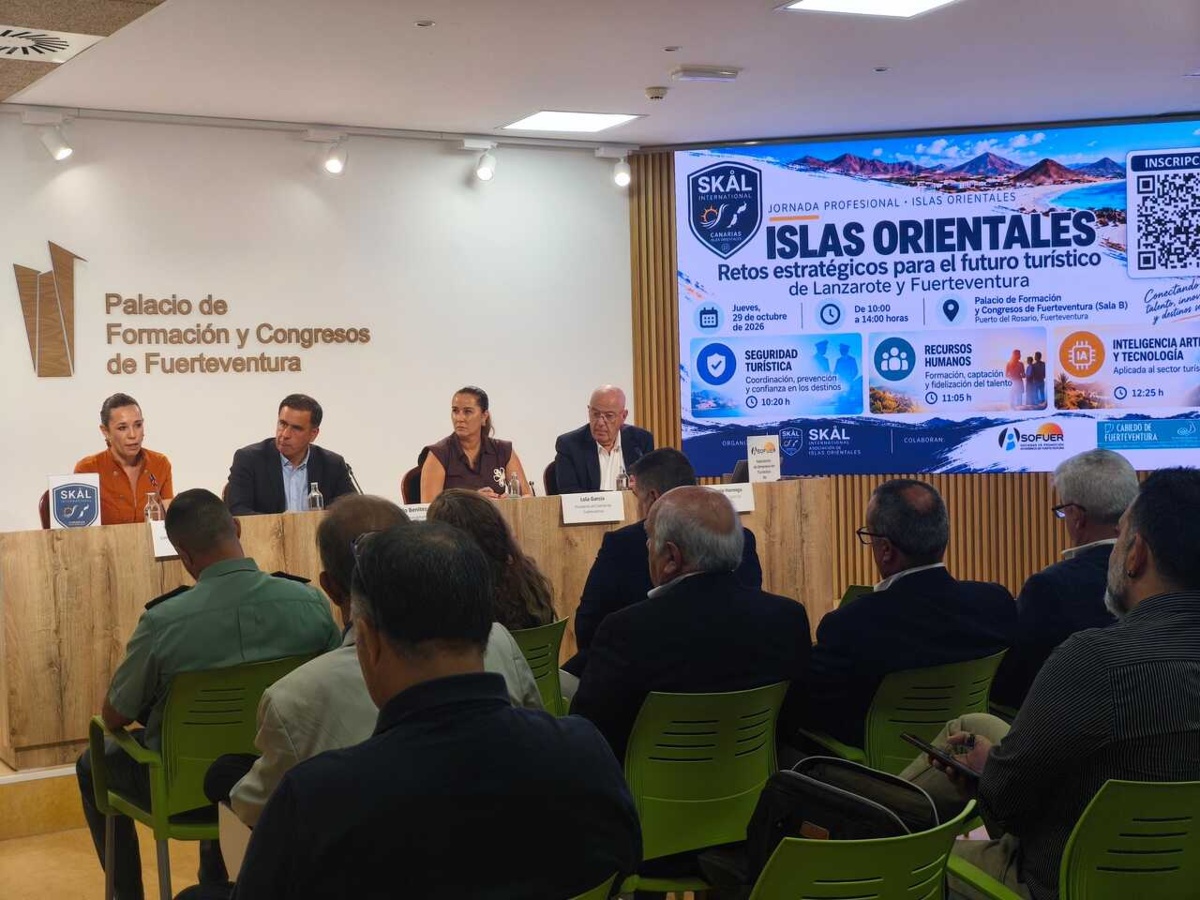
Skål Internacional Canarias Islas Orientales and the Fuerteventura Association of Tourism Businesses (ASOFUER) held the professional event “Eastern Islands: Strategic challenges for the future of tourism” at the Fuerteventura Conference and Training Centre this Thursday. The event was designed as a forum for discussion and analysis among business owners, professionals, public authorities and specialists working in Lanzarote and Fuerteventura’s tourism sector.
The event provided an opportunity to share experiences, needs and proposals on some of the challenges currently affecting the competitiveness of tourism destinations in the Eastern Islands. It also strengthened cooperation between the private sector and public authorities and encouraged the exchange of knowledge between the two islands.
The institutional opening highlighted the need to create ongoing opportunities for collaboration, enabling those involved to anticipate changes in tourism and jointly address issues affecting both businesses and destinations.
Jéssica de León, the Canary Islands Government’s Minister for Tourism and Employment, congratulated Skål Internacional and ASOFUER on organising the event and highlighted Lanzarote and Fuerteventura’s ability to work together on the sector’s main challenges. “This forum once again demonstrates the strength of the eastern axis and its ability to organise and mobilise, bringing public authorities and professionals together to discuss and analyse the challenges that will shape the present and future of our tourism sector. Fuerteventura and Lanzarote are a clear example of shared vision, cooperation and a proactive approach.”
She also highlighted the islands’ considerable weight in tourism: “more than 30% of GDP, approximately more than 24% of all those arrivals in the Canary Islands and around €9 billion in tourist spending between the two islands so far this year”.
De León also framed the discussion around the need to move towards a tourism model that prioritises value creation over purely quantitative growth.
“In islands such as Lanzarote and Fuerteventura, the real challenge is not to keep growing in volume, but to manage visitor flows better and grow in value, reducing pressure on the territory and its resources.”
The minister said the Canary Islands Government was working towards a paradigm shift based on three pillars: the wellbeing of residents, the regeneration and preservation of the environment, and the competitiveness and resilience of the tourism industry.
The programme began with a panel on tourism safety, viewed as directly linked to the quality, confidence and competitiveness of destinations. The discussion covered coordination between public authorities, security forces, businesses and professionals, as well as the need to strengthen prevention and communication in tourist areas.
A subsequent panel on human resources—training, recruitment and talent retention—examined one of the main challenges facing businesses today. Topics included the difficulty of filling certain professional roles, training, access to housing, workers’ transport, absenteeism and sick leave, as well as the need for measures to attract and retain talent in tourism.
On this issue, Jéssica de León said the Canary Islands Government was working on initiatives directly related to the discussions at the event. These included creating more stable, higher-quality jobs by retaining talent; innovation and digitalisation in the sector; safe and sustainable connectivity; and greater integration of the local economy and Canarian suppliers into the tourism value chain.
The final major session focused on artificial intelligence and technology in tourism, bringing together perspectives from public administration, technology companies and the accommodation sector. The discussion examined how these tools could improve efficiency, automate processes, provide a better understanding of customers and support decision-making. It also addressed cybersecurity, data protection and the need for human oversight.
A shared vision for Lanzarote and Fuerteventura
ASOFUER President Antonio Hormiga highlighted the importance of the sector itself taking an active part in shaping responses to the challenges affecting tourism. “Tourism challenges are increasingly interconnected and have deep links with one another. Safety, the availability of skilled workers, housing, mobility, digitalisation and artificial intelligence all have a direct impact on the competitiveness of our businesses and the quality of our destinations. Events like this allow us to listen to the sector, share experiences and work towards practical proposals that can then be put to the public authorities.”
Fernando Benítez González, President of Skål International Canarias Islas Orientales, highlighted the initiative’s inter-island focus and Skål’s ability to bring tourism professionals together. “Lanzarote and Fuerteventura share many of their challenges, as well as their opportunities. Skål wants to help connect professionals, encourage the exchange of knowledge and create spaces where we can speak openly about the sector’s real problems and, above all, put forward solutions.”
Fuerteventura Island Council President Lola García also stressed the need to address these challenges through cooperation between institutions and the economic sector. “We are committed to quality tourism that looks after the territory and improves the lives of our people. That requires public authorities, businesses and professionals to work together. Listening to those who know the sector first-hand helps us coordinate responses to challenges such as housing, mobility and training, which Fuerteventura and Lanzarote share,” said Lola García.
Growing in value and strengthening competitiveness
The event’s conclusions highlighted the importance of strengthening public-private cooperation, improving coordination between Lanzarote and Fuerteventura, and creating mechanisms to turn professional discussions into concrete proposals for action.
Jéssica de León summed up this aim, saying the challenge was to “increase the added value of the tourism experience and ensure that the wealth it generates is shared fairly and equitably across Canarian society”.
Skål Internacional Canarias Islas Orientales and ASOFUER said events of this kind should not only analyse existing problems, but also identify measures businesses can implement directly, actions requiring public-private cooperation, and proposals to be put to the relevant authorities.
The event underlined the need to maintain regular forums for professionals from Lanzarote and Fuerteventura to share knowledge, anticipate change and develop a common vision for the future of two destinations that face many of the same tourism challenges.
A combination of talent, innovation, safety, knowledge, institutional cooperation and business capability is seen as one of the main ways to move towards tourism that is more competitive and resilient, and that generates greater economic and social value in the Eastern Islands.
Source: La Voz de Fuerteventura

