
Alexis Alonso expects Pájara to give final approval in November to plan removing 12,000 tourist beds
Pájara Town Council is working to bring the definitive approval of the structural part of its General Urban Development Plan—the document’s most complex section—to a full council meeting in November, although some planning matters would remain outstanding until 2027. The plan removes tourism capacity equivalent to around 20 hotels and increases the share of protected land from 63% to 85%. “We’re going to be an example in the Canary Islands,” says Urban Planning Councillor Alexis Alonso, who identifies the provision of services as key to unlocking housebuilding.
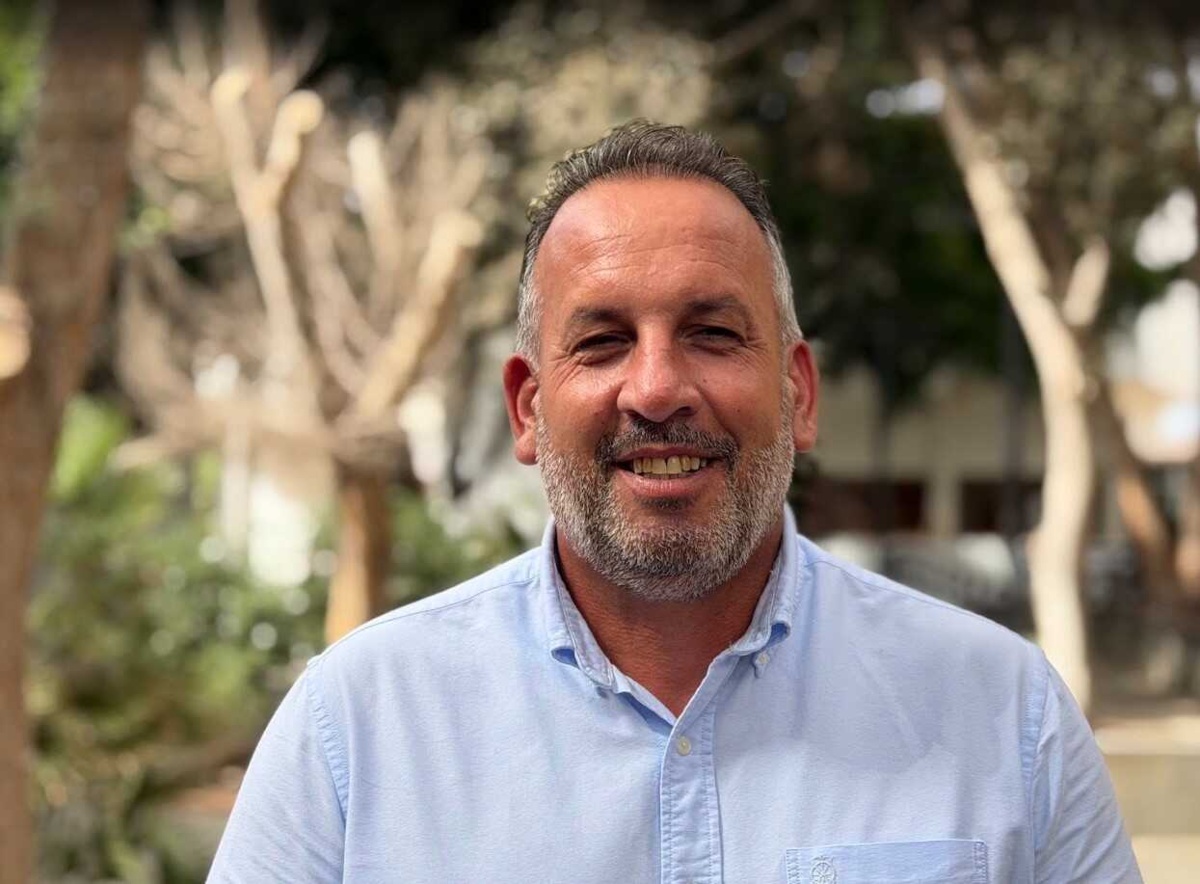
Pájara is preparing to approve the structural part of its General Urban Development Plan, the most complex section. Alexis Alonso, Councillor for Urban Planning and Works and First Deputy Mayor, told La Voz de Fuerteventura in an interview that the technical and legal teams are preparing the necessary reports to call a full council meeting, with the aim of bringing the document forward in November.
“The structural part, which is the most complex, is the one we want to bring forward for definitive approval now,” he says.
That step would settle the main part of the plan, following two and a half years of work with the Canary Islands Government and the drafting team, he says. Some “loose ends”—final planning adjustments—would remain for 2027.
“Practically speaking, that means the General Plan is approved. There will be modifications afterwards, but we will have approved the plan,” he insists.
Goodbye to around 20 hotels
The model being promoted by the southern municipality’s administration curbs expected tourism growth and allocates land earmarked for other activities to residential use. “We have removed hotel zones and golf courses to turn them into residential areas,” he says.
This means the removal of 12,000 planned tourist beds, which, according to his calculations, would prevent around 20 hotels from being built in the municipality.
Alonso highlights the removal of 1,300 beds in tourist villas in the upper part of Canalbión, as well as the removal of areas earmarked for hotels and plots in Esquinzo. “Those that remain are located practically below the road.”
He also points to the preservation of the stretch between Mirador del Salmo and Hotel H10 in Costa Calma, where he identifies Hotel Gorriones as the only existing facility. “Nothing is going to be built there,” he insists.
The councillor adds that the remaining development in Costa Calma will also be limited, while towards La Lajita there are still residential plots and some designated for tourism.
“We’re going to be an example in the Canary Islands, I say that with the utmost humility, because it’s what society is asking of us,” he says.
A rural focus
Along the same lines, the document expands rural settlements where legislation allows. “We would have liked to extend the settlements further,” he admits, with the aim of making it easier for residents to continue living in those communities. The idea is that “our people can continue to enjoy our territory and our beaches, but without overcrowding”.
Alonso also says Pájara was a pioneer in regulating holiday homes through Modification B of the General Plan. It respects existing homes and defines where holiday homes can be established and under what conditions. The plan sets parameters for each plot and type of land to ensure quality, he says.
Services determine whether homes can be built
The plan’s approval must be accompanied by infrastructure to develop the land. “If it doesn’t have the services, you can’t issue a licence,” Alonso says.
In this regard, he says the expansion of the wastewater treatment plant in La Pared will make it possible to unblock licences.
While the work is under way, the legal services are considering granting conditional licences so that homes can be built in parallel and connected to the facility once it is completed.
In La Lajita, the local council expects to receive the replotting project for the well-known La Lajita 2000 partial development plan in November.
The urbanisation scheme has already been submitted, and the council’s review required deficiencies to be corrected. “What remains is for the drafting team to submit the replotting project, which they have to deliver this month, in November,” he explains. The public consultation process will then have to be completed.
The Town Council took over the initiative after years without progress. Now, he says, “the council will pay its share, and each owner will pay their share”.
At the same time, the administration is seeking funding for a wastewater treatment plant whose project has been approved and whose investment is estimated at around six million euros. A supply of drinking water must also be guaranteed. Alonso says the administration is working on these issues but declines to set a date for construction to begin. “We’re taking it step by step,” he says when asked.
45 affordable homes licensed in Pájara
In the village of Pájara, the councillor points to an unfinished development of 45 homes intended for affordable rent. He reveals that it has been acquired by a private developer and that the Town Council has already granted a licence. Alonso does not expect any new public housing developments during the current term.
On public housing, Alonso questions announcements of land transfers to the Canary Islands Government when the infrastructure needed for construction has yet to be resolved. He explains that available plots also need services before a licence can be issued, just like a private development.
He therefore says the priority is to make progress on urbanisation and water supply. “What needs to be unblocked is the provision of services,” he concludes, calling for bureaucracy to be simplified so residents’ needs can be met. “People have nowhere to live.”
Source: La Voz de Fuerteventura