
Fear is pushing homes in Fuerteventura out of the rental market and onto the sales market: “Who is buying them?”
Real estate professional and Yoalquilo owner Yoana Garrofé warns that uncertainty is prompting landlords, including in Fuerteventura, to sell or impose stricter rental requirements. Those properties, she says, are coming onto a market where investors have the advantage “because they can buy today and complete tomorrow”. Many investors come from other countries, contributing to the erosion of the island’s identity — something that needs to be protected. To try to reverse the situation, Garrofé is calling, among other measures, for guarantees that rent will be paid, action to prevent abuses, initiatives to protect residents’ access to housing, and for small landlords — whom she says make up the vast majority — to be heard too.
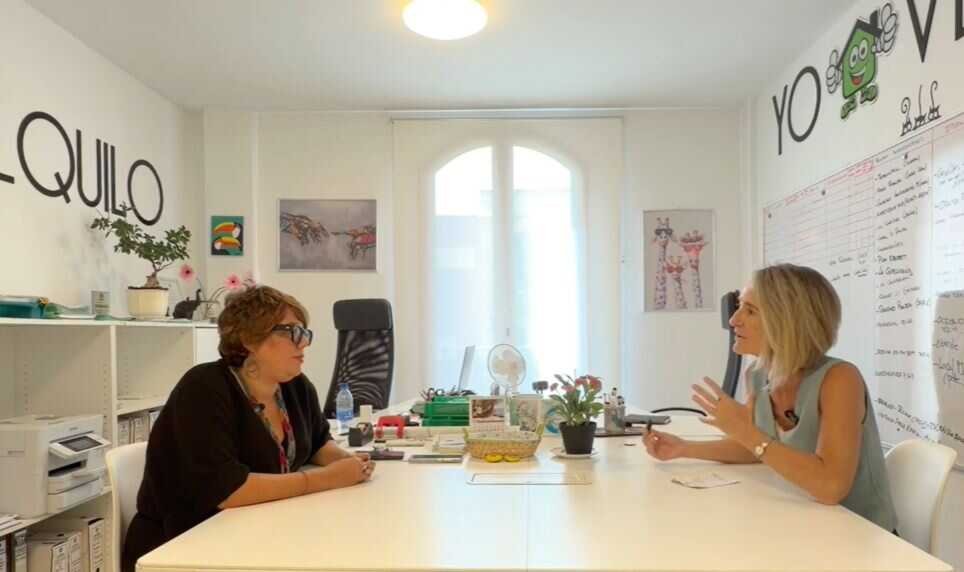
“I think the summary is fear… Fear because they feel completely unprotected.” Yoana Garrofé, owner of the real estate agency Yoalquilo, describes the concerns she has been hearing from property owners on the island in recent days.
In an interview with La Voz de Fuerteventura, she examines the factors behind the current situation, the uncertainty caused by housing decrees that lapsed in Congress last Friday, the call for a general election and the possibility that at least the first decree — albeit with amendments — will ultimately be approved by the Permanent Deputation.
Uncertainty breeds fear, with direct consequences for people looking for a home too, she warns.
In Fuerteventura, the supply of rental properties is contracting as homes move onto the sales market. Those that remain available come with increasingly difficult requirements, she says.
From renting to selling
In Fuerteventura, some large landlords have already sent formal notices to their tenants to say that they will not renew their leases when they expire, intending to put the properties up for sale.
One such case is a businessman who prefers to remain anonymous. His rental properties go for between €300 and €400, including a four-bedroom home near the sea. “We’ve never raised the prices. We’d never worried about it because we thought it was better to have good tenants who paid their rent,” he explains.
Despite keeping rents well below market rates, he regrets that people treat him like an abuser simply because he owns several properties. “We’re fed up with people looking at us with envy and speaking badly of us,” he says. He believes the situation could get worse and is even considering leaving Fuerteventura.
His is not the only case reflecting the sector’s uncertainty.
Garrofé says that on the day of the interview, Monday, she was due to meet another — very flexible — landlord who had to decide whether to rent or sell. His decision, she says, is being shaped by doubts about the measures the Government may approve.
Others are keeping their properties available to rent but restricting the types of tenants they will accept. The head of Yoalquilo says some have told her they intend to rent only to civil servants, believing their job security offers greater protection if they face a situation of vulnerability.
She recalls one landlord who had previously accepted tenants without permanent contracts if their work history and references were reassuring. Now, she says, he fears taking on a risk he feels unable to bear.
Some properties are also being left empty because of their owners’ demands. “Landlords are usually afraid because of a bad experience,” she says.
In her view, assessing a prospective tenant means looking beyond their employment contract. Having lived in the same home for ten years also says something about their conduct as a tenant.
Who bears the cost of vulnerability?
Much of the concern among landlords relates to the protection from evictions until 2030 envisaged in the housing decree.
Garrofé rejects the idea that small landlords should bear the cost of successive governments’ failure over decades to build public housing and protect vulnerable people.
She is therefore calling for measures that guarantee landlords’ income, with the administration covering the cost when a vulnerable person cannot pay.
“If I have a mortgage, I’m obliged to pay the bank,” she points out. That obligation continues even if an eviction is suspended, she adds. Those without a mortgage also have expenses that they cover with rental income. “Because I shouldn’t have to take responsibility for it on my own and bear the financial consequences of someone else,” she says. In the end, the landlord may be the one who becomes vulnerable.
Among the possible solutions she also proposes insurance that guarantees rent payments, or the Government paying the rent when a situation of vulnerability has been confirmed.
She is also calling for more information. “There’s a lack of information,” she says, summing up the speed with which measures are announced and the doubts they create among landlords and tenants.
Rents forcing people to share homes
Insecurity is compounded by prices that are beyond the means of many families. Someone earning €1,500 and paying €1,000 in rent has barely €500 left to cover their other expenses, she explains.
That pressure is changing how people live together. Families who once lived in separate homes are now looking for larger properties so several generations can share the rent. They live in tighter quarters but can manage the monthly payment more easily. Large flats in Fuerteventura are also becoming more common, with the living room removed to make way for extra bedrooms. It is undoubtedly a more lucrative form of accommodation.
Given what she sees every day, Garrofé believes the market needs intervention to curb prices that are reducing quality of life and people’s spending power.
Rising rents also affect shops and restaurants, for example, she says, because money spent on housing is no longer spent at other businesses, weakening the circular economy.
She offers a qualification when it comes to large landlords. Some of those she works with charge lower rents than small landlords and accept a wider range of tenants with greater flexibility. For that reason, she believes the number of properties someone owns does not, by itself, explain their rental terms or determine their impact on the market.
Holiday lets and their profitability
Garrofé points to the lack of oversight of holiday lets as one of the factors that has reduced the supply of homes for residents and driven up rents, particularly in the Canary Islands and islands such as Fuerteventura. She criticises the pursuit of profit that has led to unsuitable spaces being offered, and calls for protection for those who live and work on the island.
But she warns that “not all holiday lets are as profitable as people think”.
Location, utilities, cleaning, agency fees and maintenance all affect returns. She says some owners entered the market without calculating the costs or checking whether their property could generate the income they had heard about from other cases.
After trying it, some return to the residential rental market. “A great many people have jumped on the holiday-let bandwagon without first doing their research,” she says.
In her view, the crisis is also driven by population growth and the insufficient construction of homes, so she is calling for a response that addresses those causes too.
“Who is buying those homes?”
The shift of properties from the rental market to the sales market raises another concern for the real estate professional.
“Who is buying those homes? What are they buying them for?” Garrofé asks.
Although a larger supply could help bring prices down, she warns of the difference between a resident who needs financing and an investor able to close a deal immediately.
“A private buyer won’t be able to compete with an investor because the investor can buy it today and complete tomorrow,” she explains.
She recalls showing a property to five potential buyers in just two hours. Some were investors and others were young people from Fuerteventura. She says she told the sellers she was concerned about making it accessible to those young people. They understood her position and ultimately chose the buyers from Fuerteventura.
Garrofé links this lack of access to the loss of the island’s identity. She supports people coming from elsewhere and cultural diversity, but believes residents’ access to housing must be protected. “Residences need to be protected too, in order to preserve the island’s character,” she says, describing an island “where it’s hard to find someone from Fuerteventura”.
Small landlords must also be heard
The head of Yoalquilo is calling for unused homes to be brought back into use and for people with different perspectives on the problem to be heard: those looking for homes, tenants, professionals and landlords.
“I’d love them to take the voice of the people into account when making decisions,” she says.
Her appeal explicitly includes people who own just one property and rely on the rent to pay a mortgage or supplement their income. She believes meetings focused on large landlords, which are the norm, leave out a significant part of the picture. “Ask that person, not just someone who owns 40 or 50,” she urges.
Garrofé is also highly critical of the Government’s management of SAREB, which owns numerous properties in Fuerteventura, most of them unfinished. The entity, majority-owned by the Government, is neither selling nor auctioning homes that could help alleviate much of the existing shortage.
“The Government needs to get its act together. Just as you issue a decree for one thing, issue one for the other and bring these homes into use. You can’t leave them sitting there when there’s a housing shortage, do nothing and turn a blind eye. That doesn’t help. Turning a blind eye helps no one,” she concludes.
Rest in peace, Maricarmen
After this article was written, news emerged of the death of Maricarmen Abascal, the 87-year-old woman evicted on 23 September who had become a symbol of protest over the housing situation. The Tenants’ Union was calling for a general strike, agreed with the main trade union organisations and CCOO and UGT, for 11 November, just 15 days before the general election scheduled for 29 November.
Source: La Voz de Fuerteventura